softmachines
All works

A Softmachines work · Solar engineering

Turn your site into a solar project you can trust.

Analemma turns a roof, field, or slope of land into one connected photovoltaic project: a physical design, an energy model, a financial case, the applicable rules, and the documents that make each decision reviewable.

AnalemmaSite intelligence · PV design · regulated deliverables

The premise

Engineering deserves grounded instruments.

A solar project begins with a real place and ends with a decision somebody must defend. Between them sit site geometry, modules, strings, inverters, cables, permits, finance, and paperwork. When those pieces live in separate tools, teams rebuild the same reasoning over and over.

Analemma keeps that chain in one working project. It holds the repetitive work, cross-checks, citations, and inputs together, while making clear what is modelled, sourced, or still missing. The engineer can spend more attention on the judgment that only a person can make.

The work made legible

Every number has a source, a model, or a clear absence.

Turn ground into a buildable array.

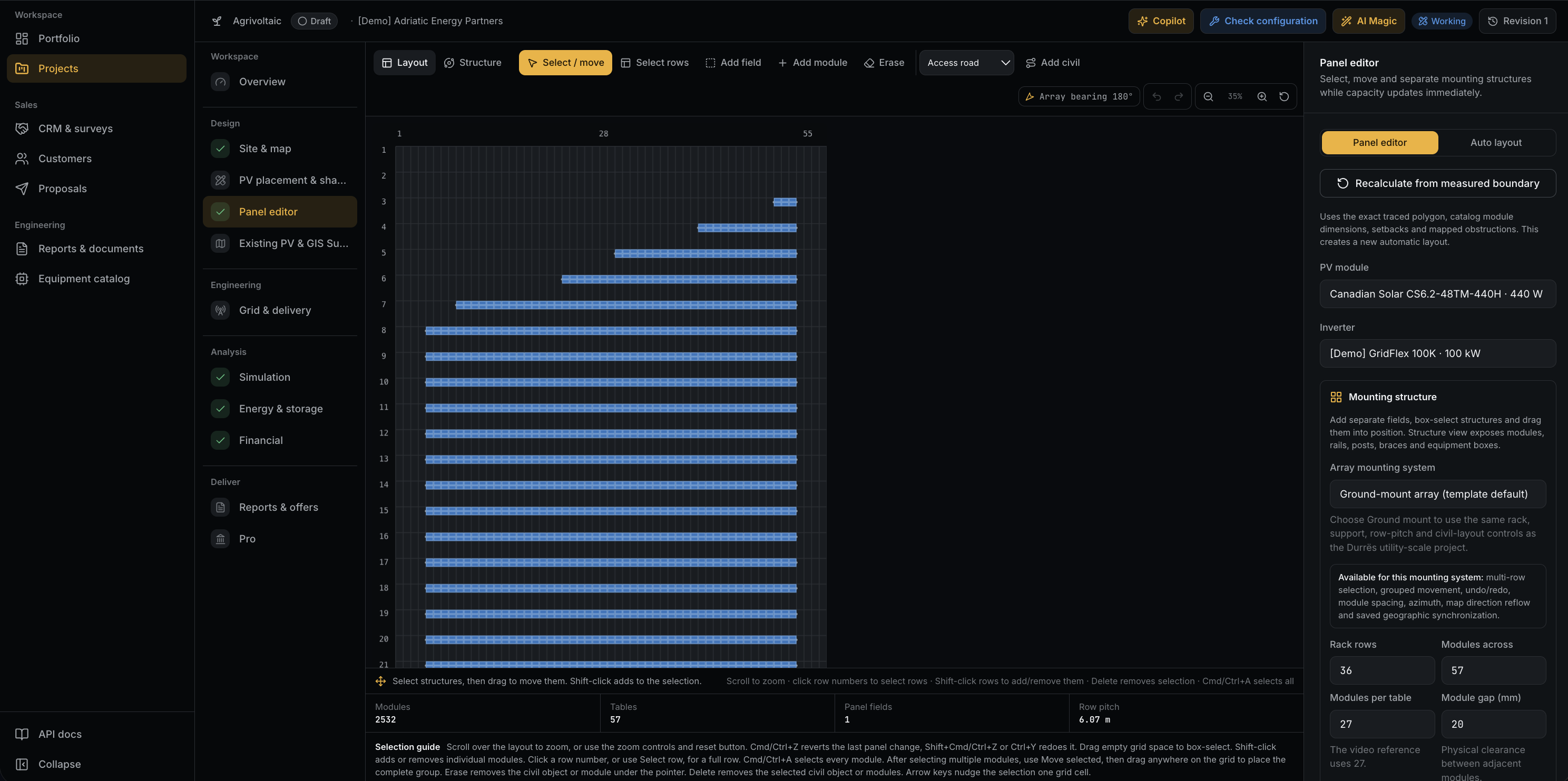
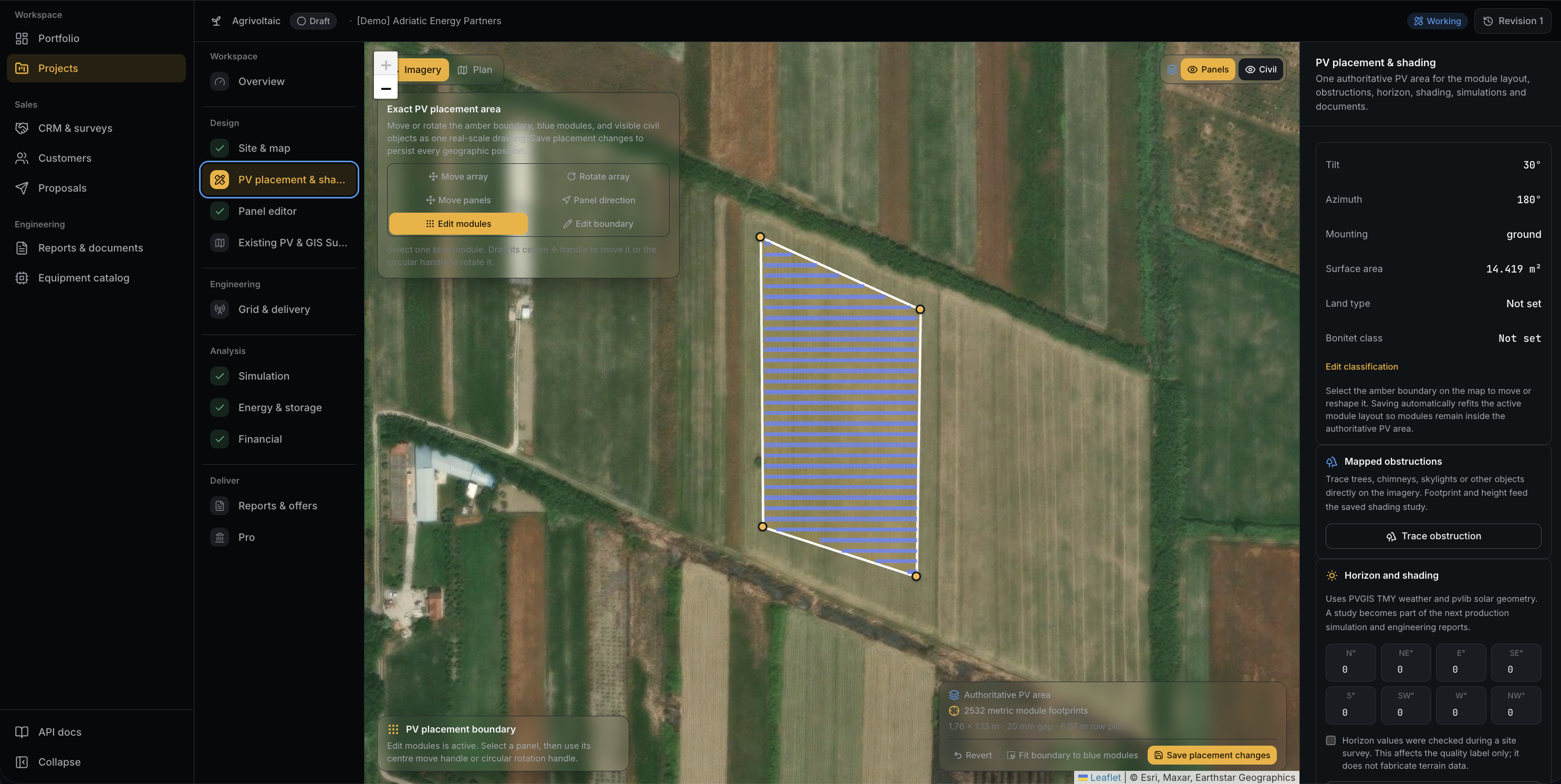
The layout workspace makes modules, rows, gaps, and clearances visible as part of the same project. A change is not only a drawing edit. It changes the physical plant that must be built, inspected, and explained.

Analemma keeps geometry, equipment, and constraints in view together, so an engineer can test a denser layout or a safer spacing without losing the reasoning that supports the choice.

Analemma array layout workspace showing configurable photovoltaic rows and spacing
Analemma electrical sizing workspace for photovoltaic strings and inverters

Make the electrical design prove itself.

Modules and inverters are not names typed into a report. Analemma brings their real characteristics into the electrical design, then checks string length, voltage at the coldest recorded temperature, inverter limits, and the configuration around them.

Those checks stay attached to the selected equipment and project geometry. A change in the layout or catalog can be assessed where it matters, before it becomes a field problem or an unsupported claim.

Let the financial case inherit the physical model.

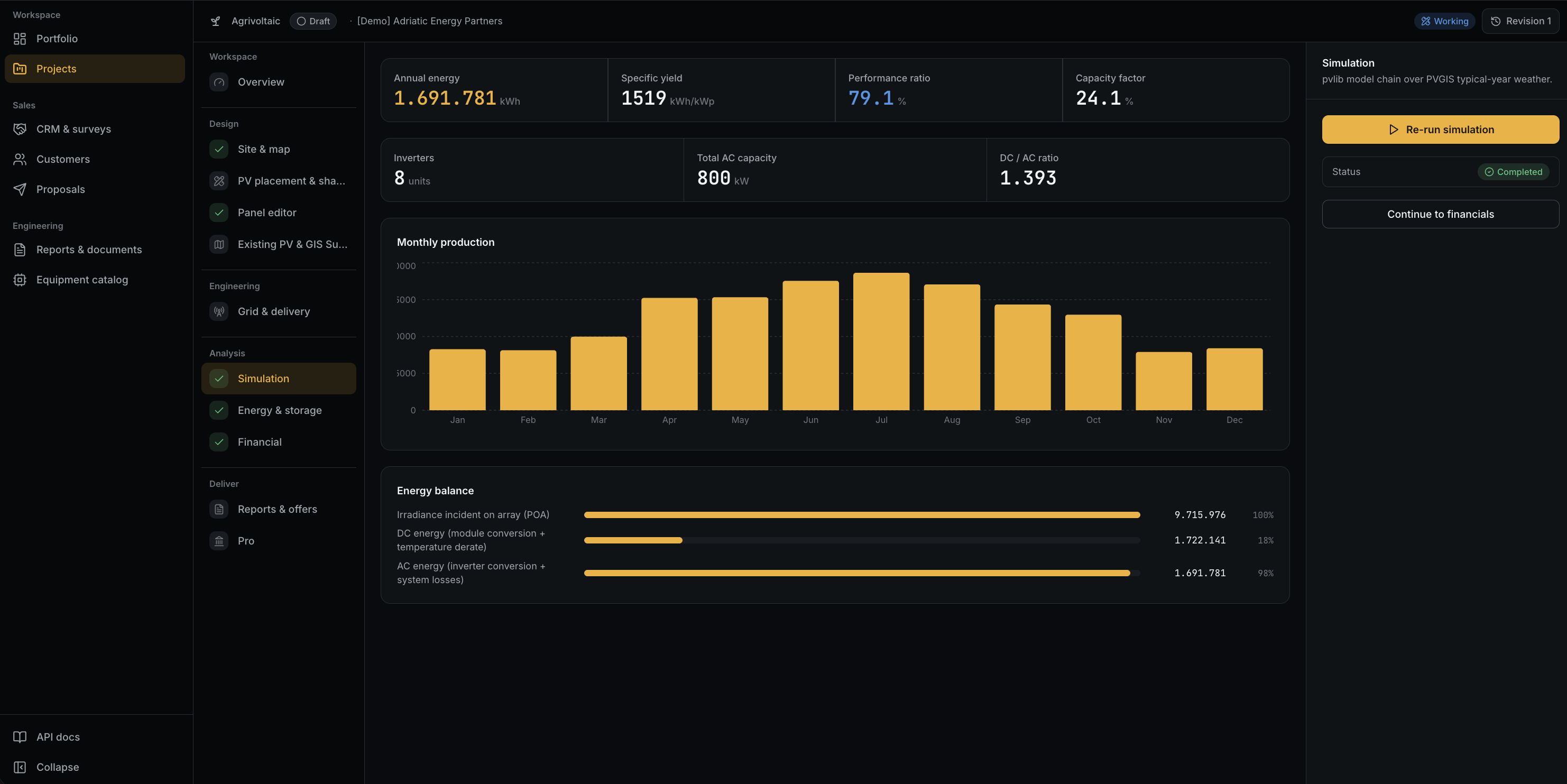
The economics view receives the system that was actually designed. Expected production, loss, costs, tariff assumptions, degradation, cash flow, payback, NPV, IRR, and levelized energy cost remain connected to the plant that must produce them.

That gives a customer, lender, or project team a financial argument they can trace back to the site, equipment, and model, then challenge when an assumption changes.

Analemma economic model with production chart and financial metrics for a photovoltaic project

The whole project

One project carries the reasoning all the way through.

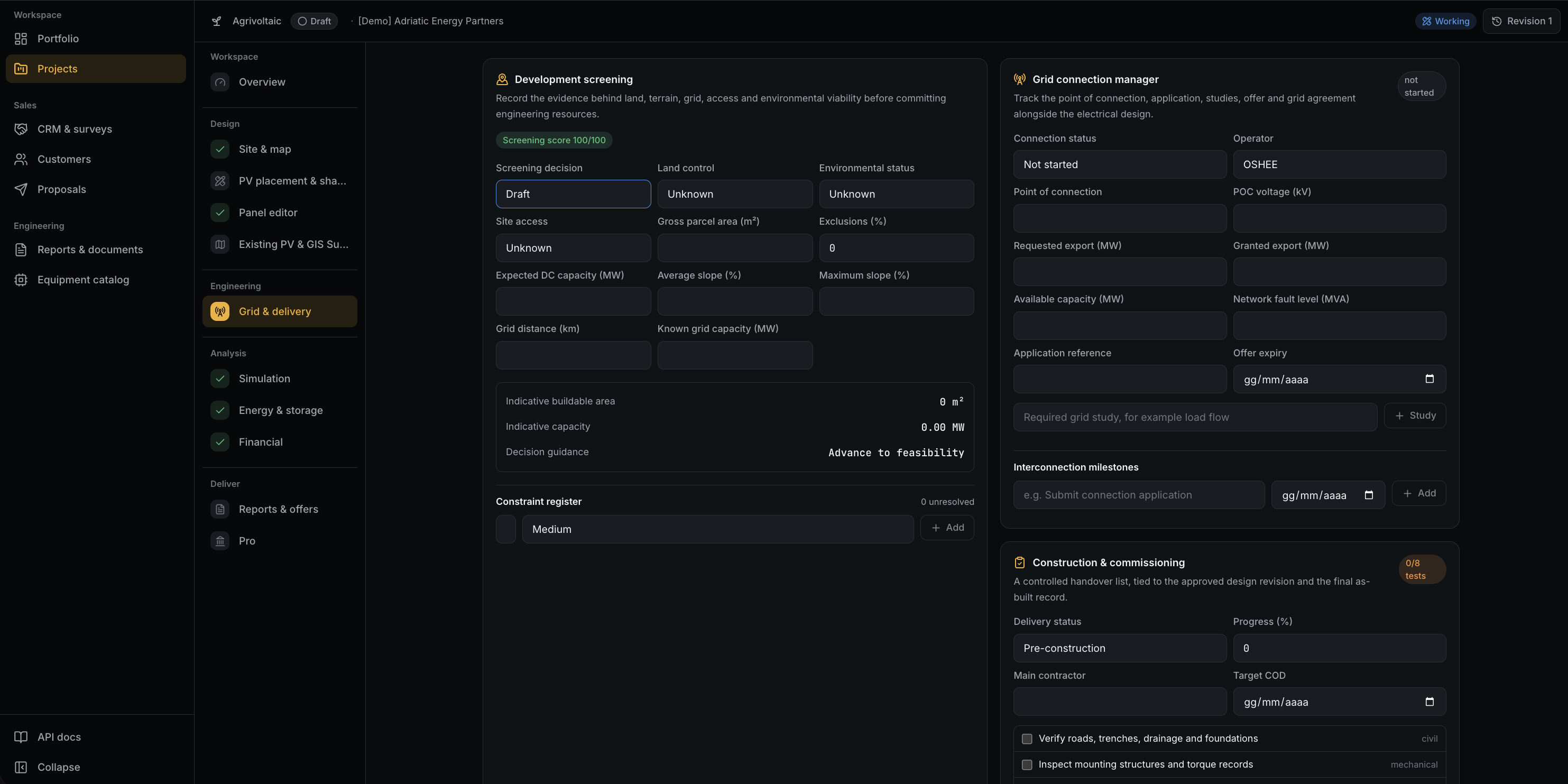
Customer intent, site evidence, engineering choices, financial assumptions, applicable rules, and issued documents remain part of one traceable record. The work does not reset at each handoff.

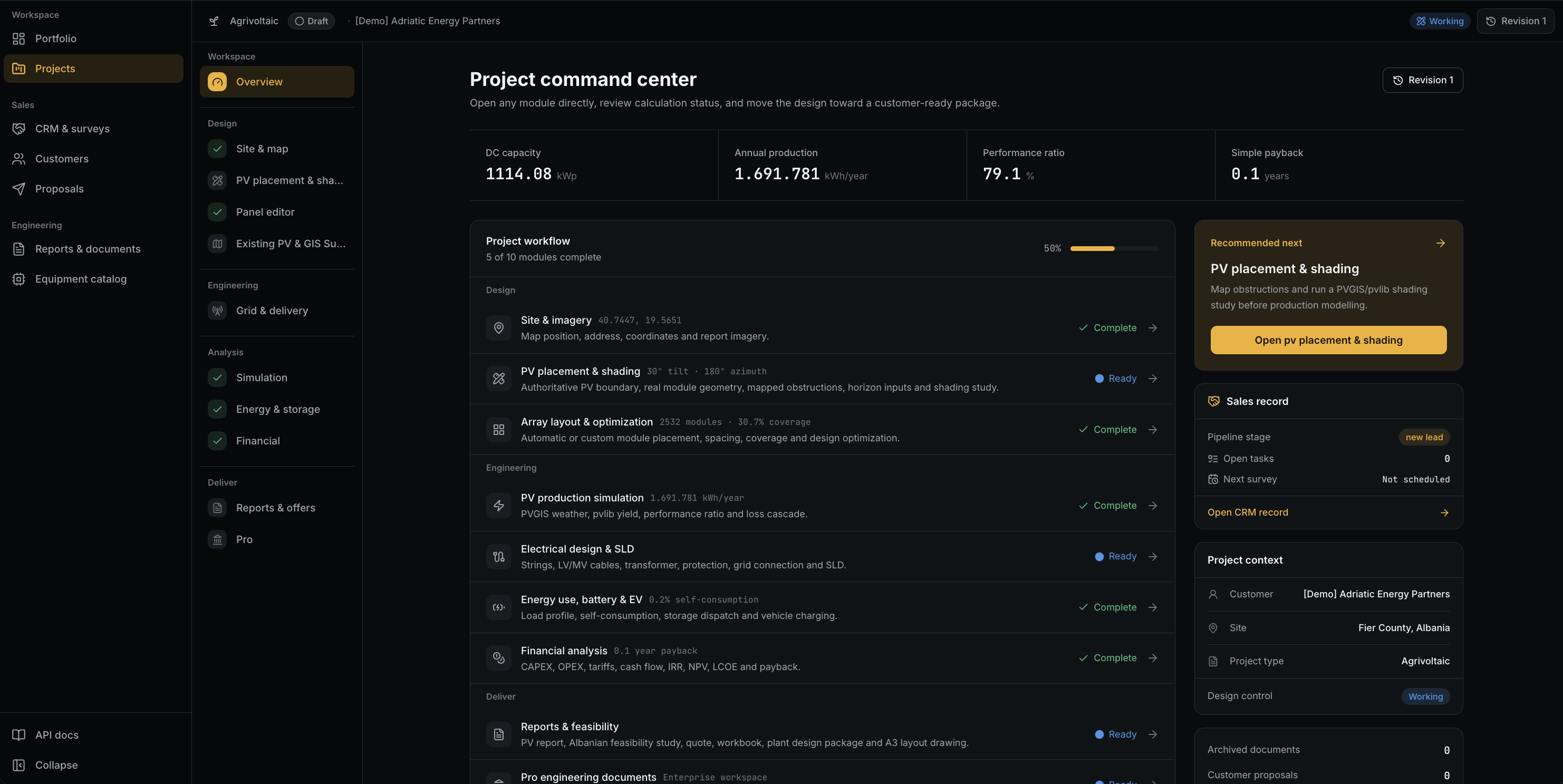
Analemma project command center connecting design, simulation, review, and deliverables

The project stays connected while the design moves.

The command center shows what has been checked, what still needs attention, and which outputs are ready to issue. It gives a small team one shared view without flattening the project into a status label.

When a design changes, the next simulation, financial view, compliance check, and document can inherit the revised context. There is no need to reconstruct the story from email, a spreadsheet, and an outdated attachment.

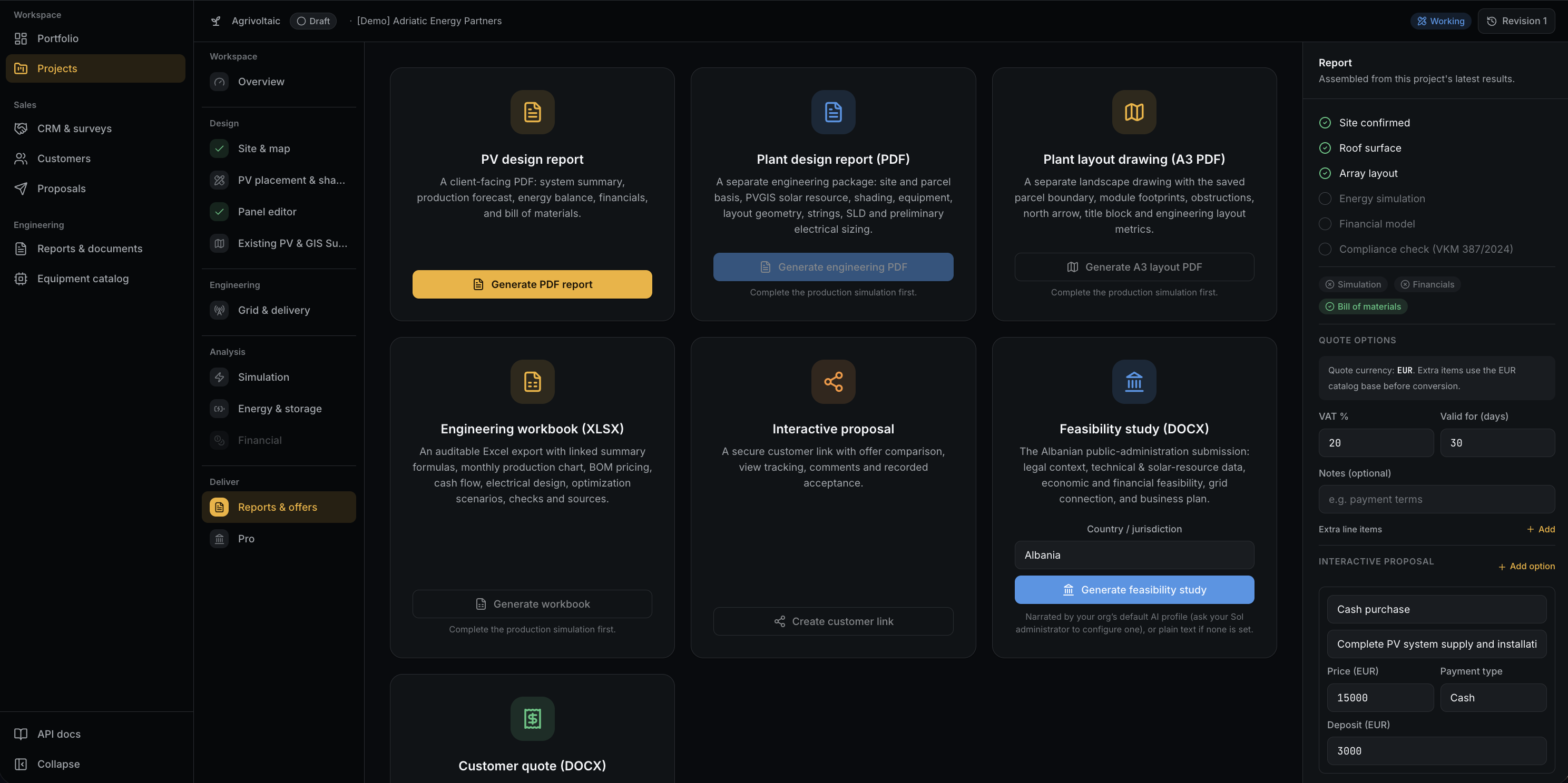
Analemma deliverables hub for proposals, PV reports, and engineering documents

A deliverable leaves with its evidence.

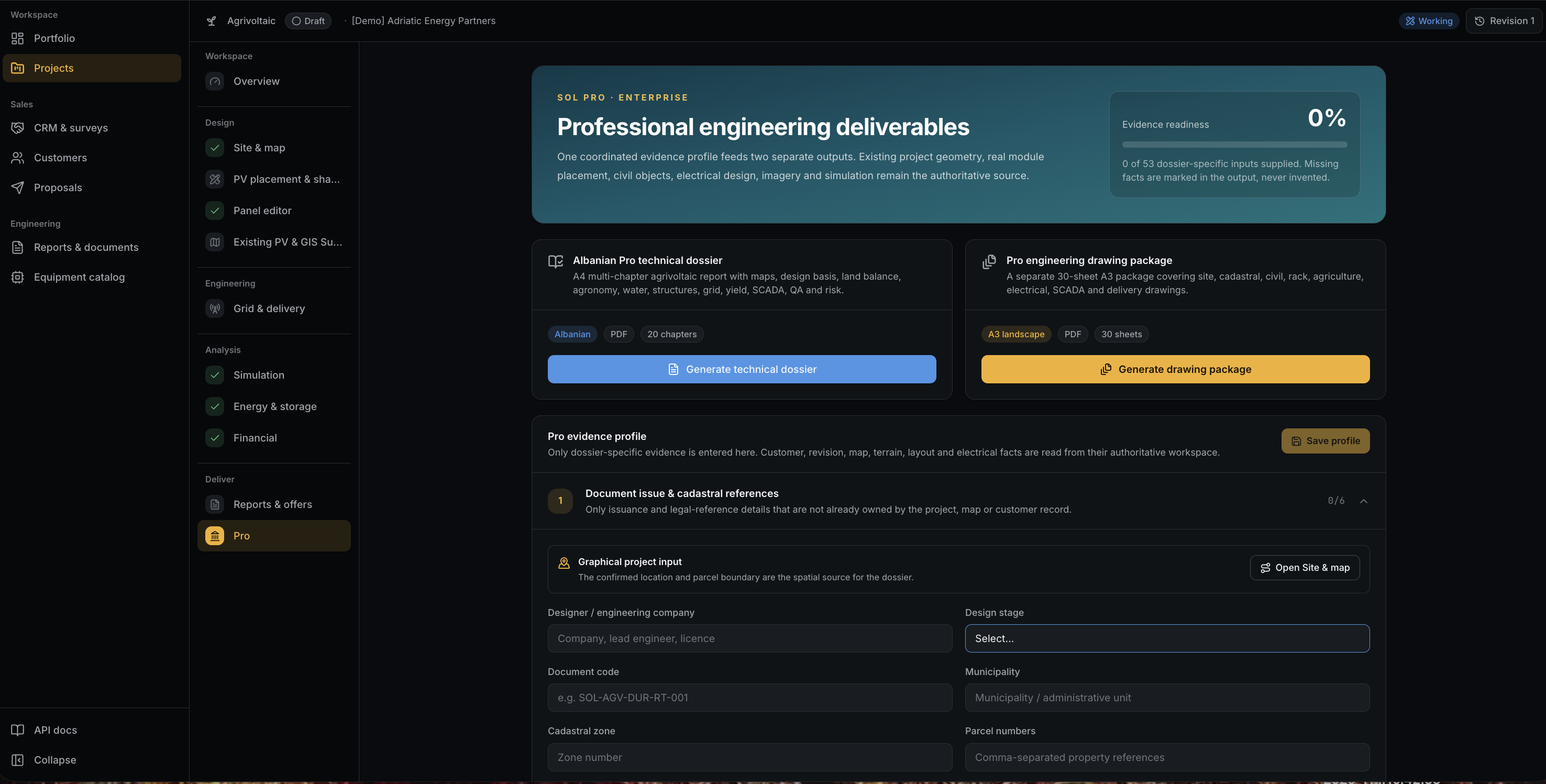
Different readers need different documents, but they should not need different versions of the truth. Analemma prepares the client-facing proposal, engineering report, feasibility study, and technical material from the same project record.

That keeps the conclusion connected to its source. A reviewer can see what was designed, why it was designed that way, the assumptions behind it, and the regulation or datasheet supporting the important claim.

The outcome is not a prettier spreadsheet. It is a photovoltaic project whose numbers, rules, and documents still agree.

AI in the design loop

Describe the intention. Receive a plan grounded in the project.

AI works from the site, boundary, geometry, catalog, electrical design, model, costs, documents, and jurisdiction already open in Analemma. It does not begin from a generic prompt.

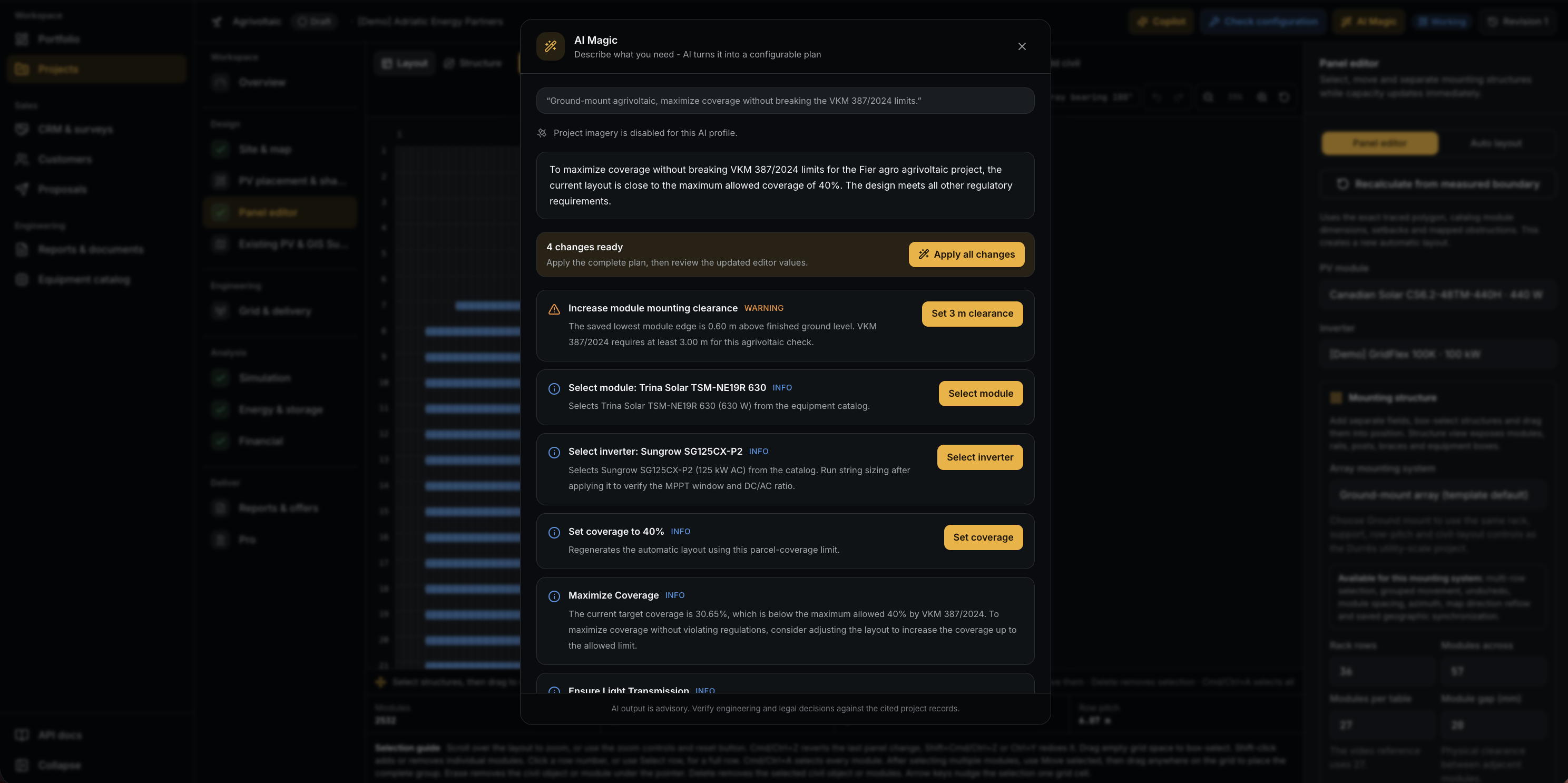
Analemma AI assistant translating engineering intent into reviewable photovoltaic design actions

Ask for the next design move in ordinary language.

An engineer can describe a target capacity, battery requirement, budget, preferred manufacturer, or agrivoltaic constraint. Analemma turns that intent into specific, reviewable changes: a module or inverter option, row spacing, mounting assumption, electrical configuration, missing input, or report section that needs evidence.

The proposal remains anchored to the actual project. It can be inspected before it is applied, and it never needs to invent a component, law, or performance claim just to make the answer feel complete.

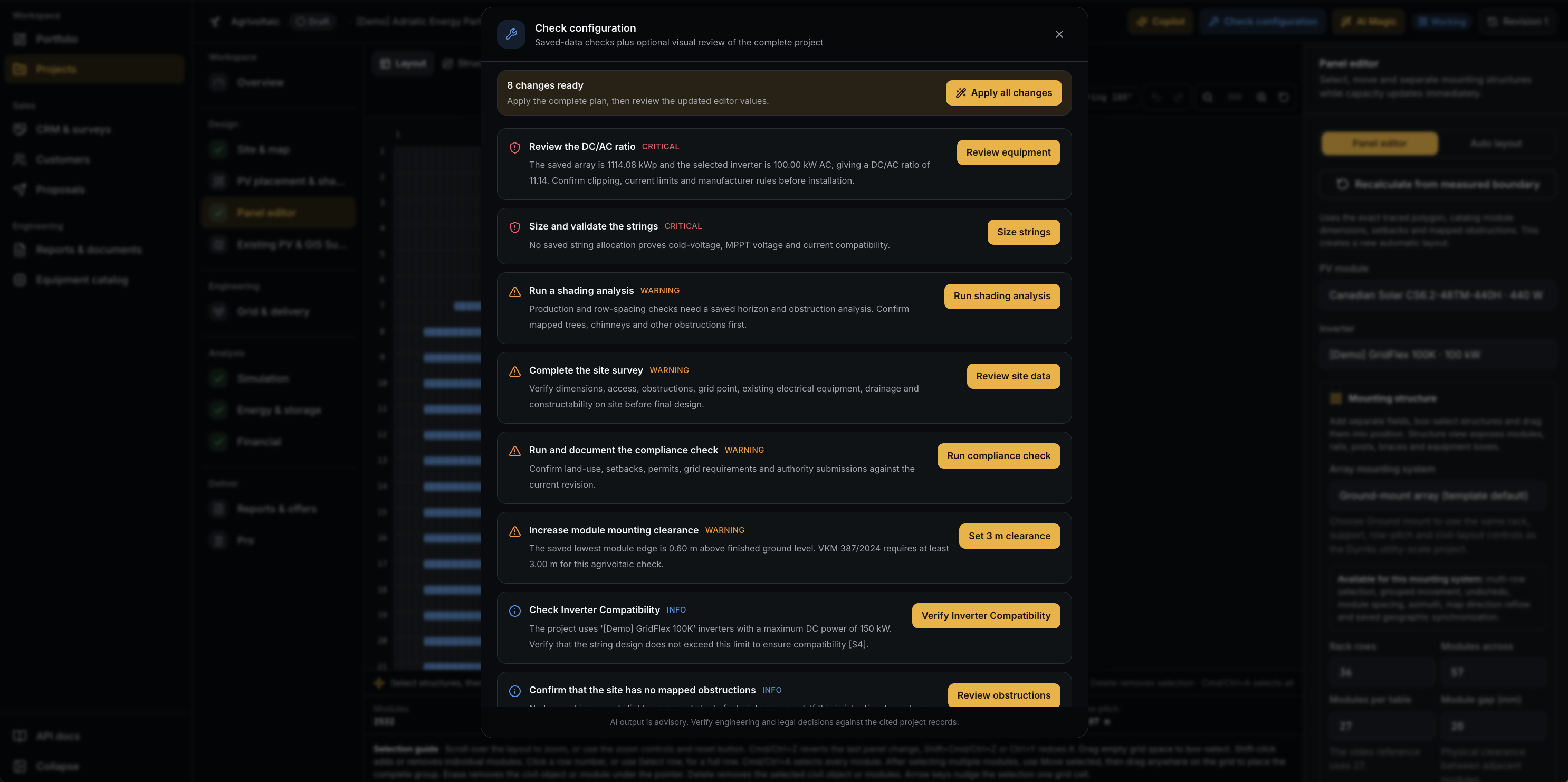
Analemma AI design review showing specific engineering checks and suggested actions

Review the design like a second engineer.

Analemma can review a finished design for an undersized inverter, string voltage outside a safe range, a layout that could be denser or safer, and legal or technical inputs that have not yet been supplied. It returns a specific applicable check, not a vague warning.

The review is useful because the system can repeat the same cross-checks without fatigue. It remains honest because the engineer can inspect the basis, accept or reject the proposal, and keep responsibility for the final design.

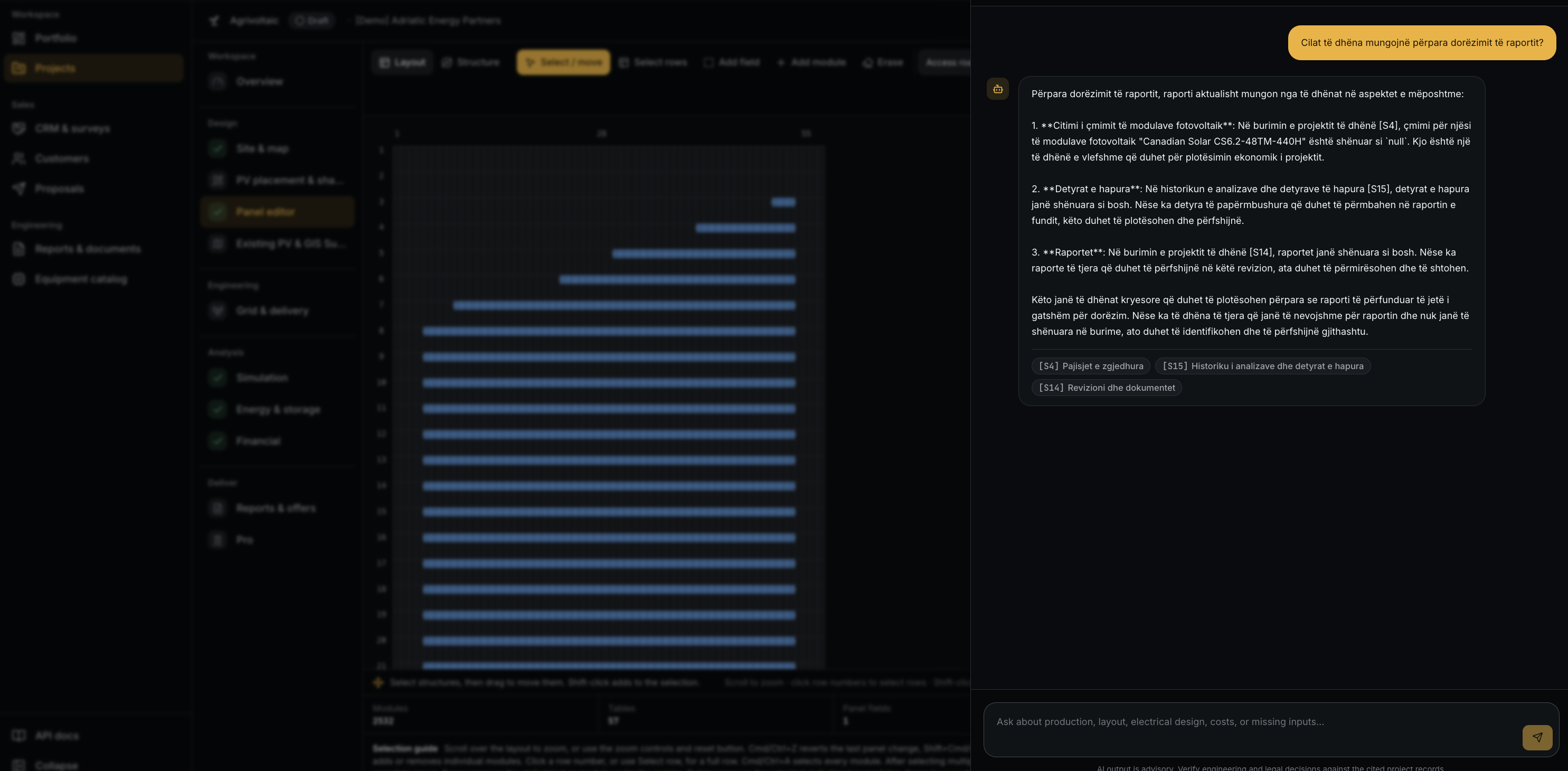
Analemma AI assistant presenting reviewable actions for a photovoltaic project

Every proposal arrives ready to inspect.

AI can narrate a result, explain a constraint, and prepare an action that a user can apply directly to the project. It removes the friction between knowing what is needed and seeing the next step in the design.

Before a suggestion appears, Analemma checks it against the organization’s catalog, the project data, physical limits, and applicable rules. What cannot be verified is stated as missing or left out. The system helps move the work forward, while the engineer decides whether it is sound.

AI translates, checks, and proposes.

Analemma uses intelligence where engineers repeatedly translate between forms: a natural-language brief into a design action, project geometry into equipment choices, a model into an explanation, and a finished system into a second-engineer review.

Its confidence comes from being bounded. Suggestions are checked against the real project, the approved catalog, physical limits, and applicable regulation. Analemma says what it cannot verify instead of filling a report with plausible-looking assumptions.

The engineer keeps the final word because their license, signature, and judgment are on the line. Analemma gives smaller teams more time and clarity, preserving the rigor that makes a project defensible.

Energy Intelligence

Know what the plant is doing. Know why. Know what comes next.

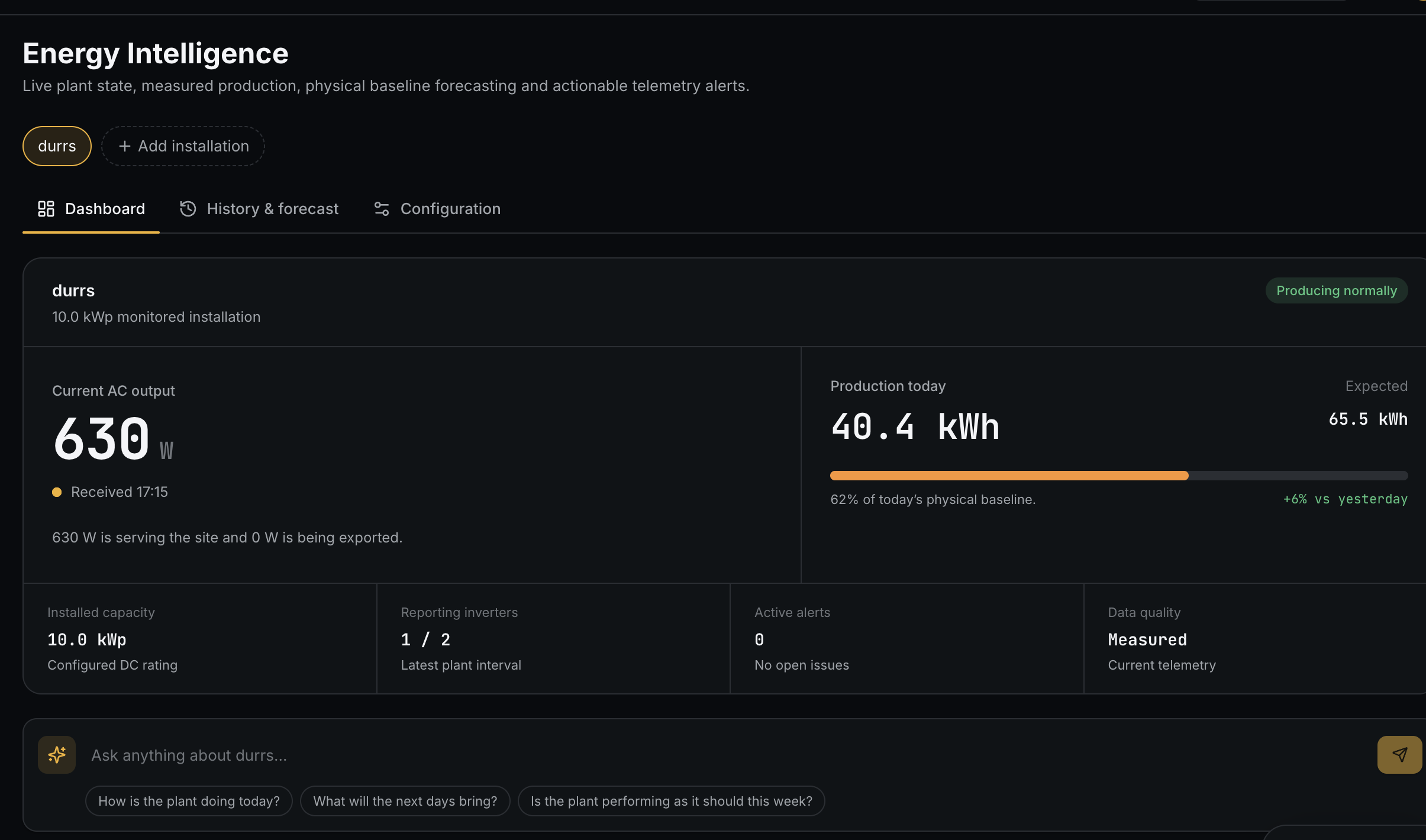
From the first array decision to the way the finished plant performs, Analemma keeps one physical story intact. Live telemetry, weather-adjusted history, site-trained forecasts, and grounded explanations show what is happening now, why it changed, and what is likely next.

Analemma Energy Intelligence overview showing live output, production against expectation, inverter coverage, alerts, and data quality
630 W now. 40.4 kWh today. One of two inverters reporting. Nothing important is averaged away.

01 · Design

The physical model defines what this site should be able to do.

02 · Live

Verified inverter and meter readings show what it is doing now.

03 · History

Weather-adjusted days reveal outages, drift, and recurring loss.

04 · Forecast

The model that backtests best on this plant earns the next prediction.
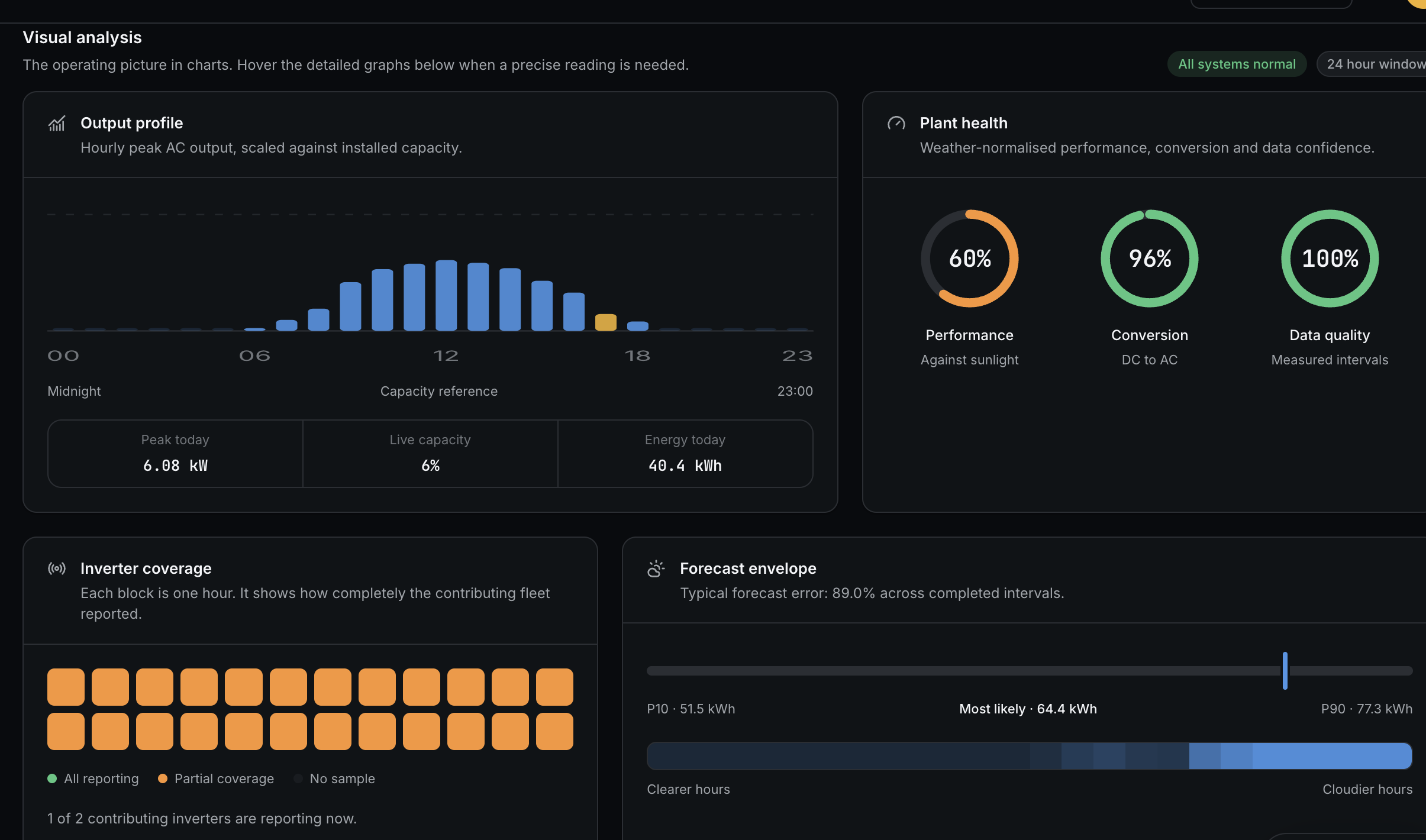
Analemma visual analysis showing the hourly output profile, plant health, inverter coverage, and forecast envelope

The operating picture

A plant should be readable in one glance.

Analemma places current output, production against expected, inverter coverage, active alerts, and data quality in the same field of view. The picture stays simple enough to scan, then opens into hourly shape, conversion health, and forecast uncertainty when detail is needed.

A partial inverter fleet cannot masquerade as a complete plant total, and a measured value never shares the same visual status as an estimate.

Live and next

Now and next belong on the same screen.

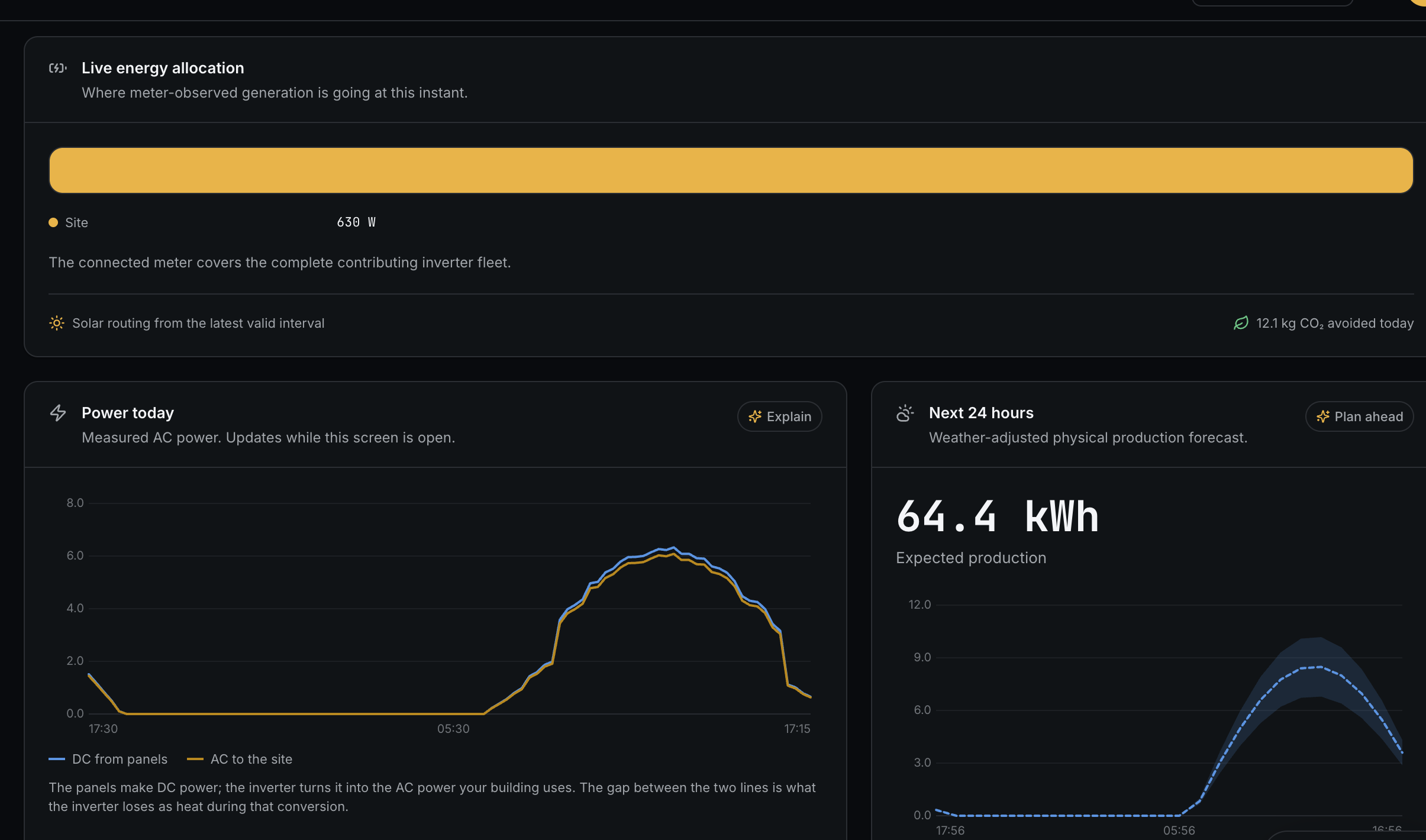
DC and AC curves show how generation is moving through the plant. Beside them, the next twenty-four hours arrive as a likely line inside a visible range, so a forecast communicates uncertainty instead of hiding it.

The baseline follows the project's physical design and the weather that actually occurred. Operators can separate cloud from conversion loss before calling a normal day a fault.

Analemma live energy allocation, measured DC and AC power, and the next twenty-four-hour forecast range

Grounded AI

The explanation lives inside the evidence.

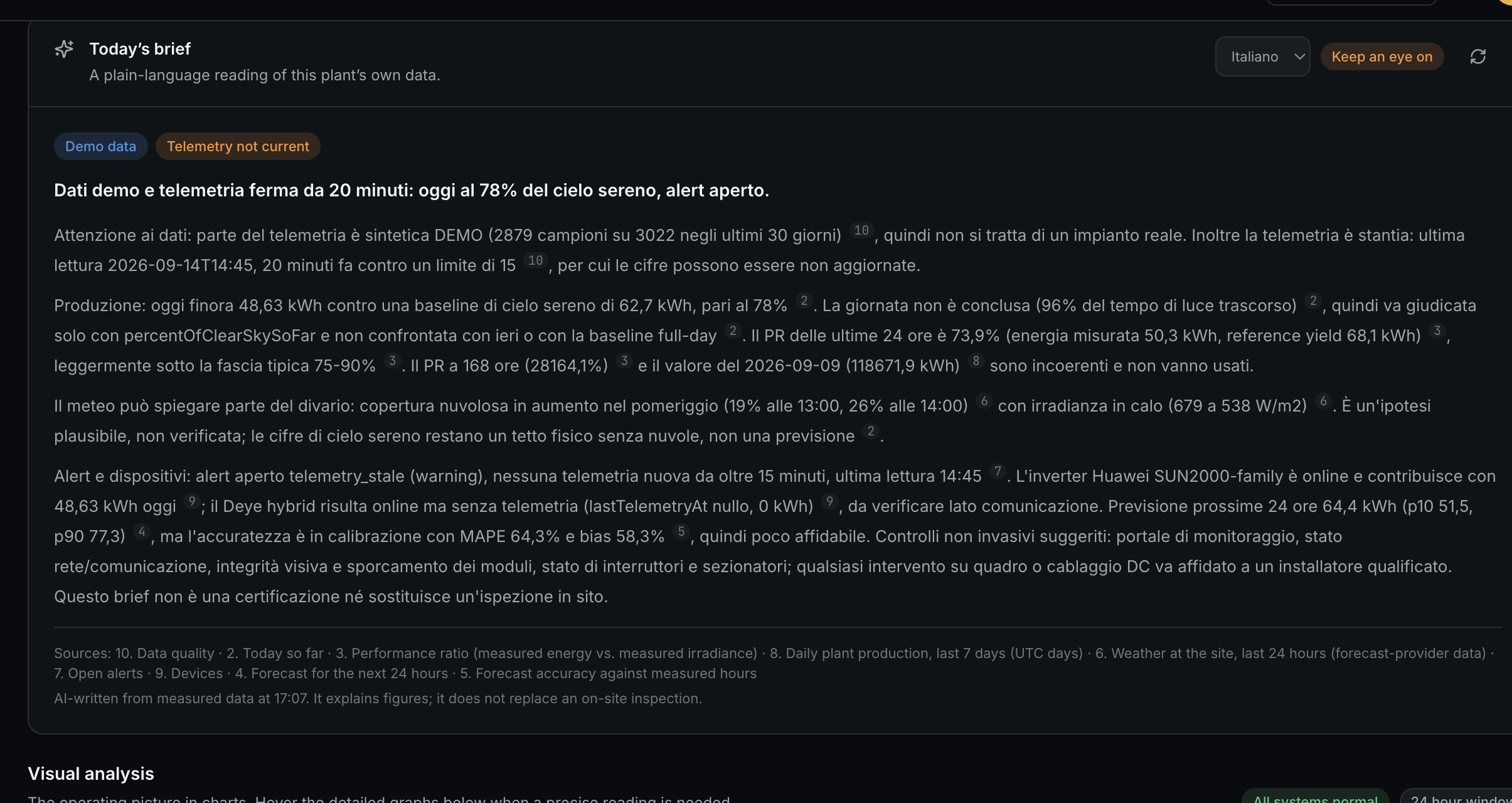
Analemma's assistant already knows the plant, day, range, and search in view. It retrieves only the few datasets the question needs, cites the figures behind its answer, and says when telemetry is stale, synthetic, or missing.

Daily briefs turn live state into a concise reading of performance, weather, inverter coverage, alerts, and uncertainty. AI is an instrument for reading the plant, not a second source of truth.

Analemma grounded daily brief explaining plant performance with cited telemetry, weather, inverter, alert, and forecast evidence
A sentence is useful only when the numbers behind it remain visible.
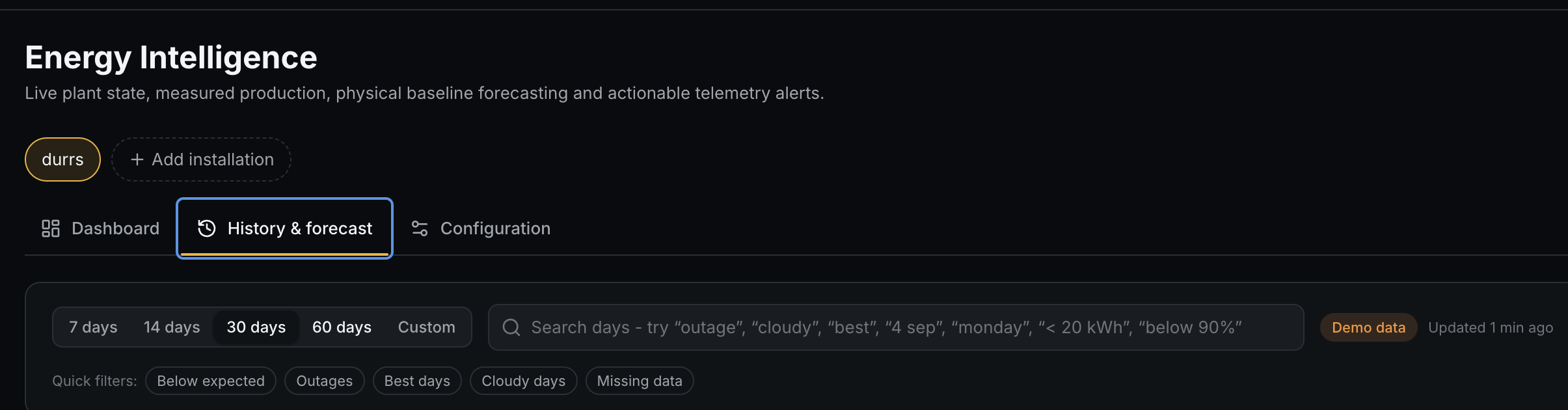
Analemma history search for days by date, production, weather, outage, performance, or missing data
Thirty days of telemetry can be queried as naturally as one day.
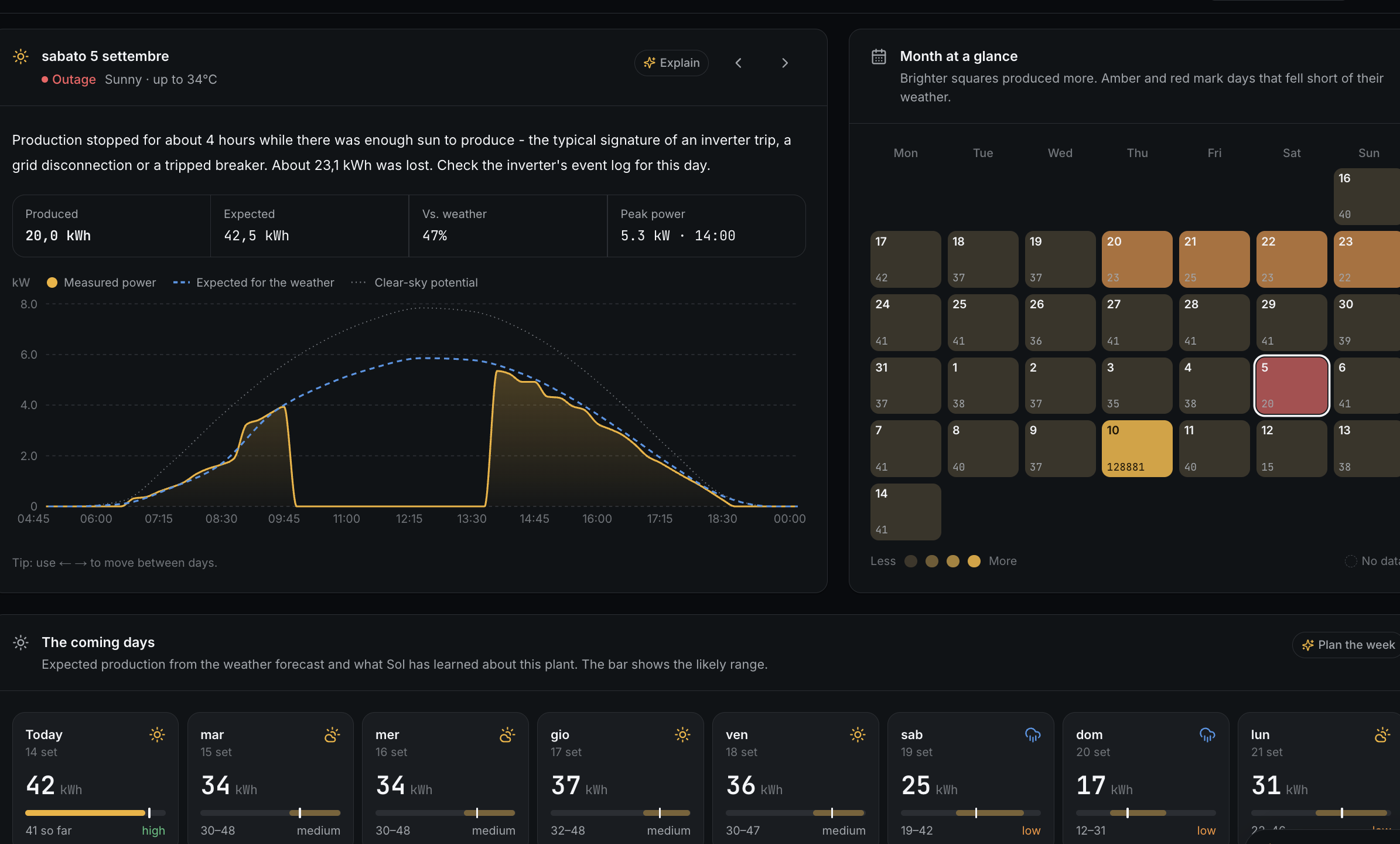
Analemma historical day view showing an outage against measured, weather-adjusted, and clear-sky curves beside a monthly performance calendar

Historical intelligence

A month becomes a pattern. A day becomes evidence.

The calendar marks normal days, underperformance, and outages against the weather each day actually received. Open one day and the measured curve sits beside weather-adjusted expectation and clear-sky potential, with the interruption and estimated energy loss made explicit.

Operators can search in ordinary terms such as outage, cloudy, best day, or below 90%, then move from the answer back to the curve that supports it.

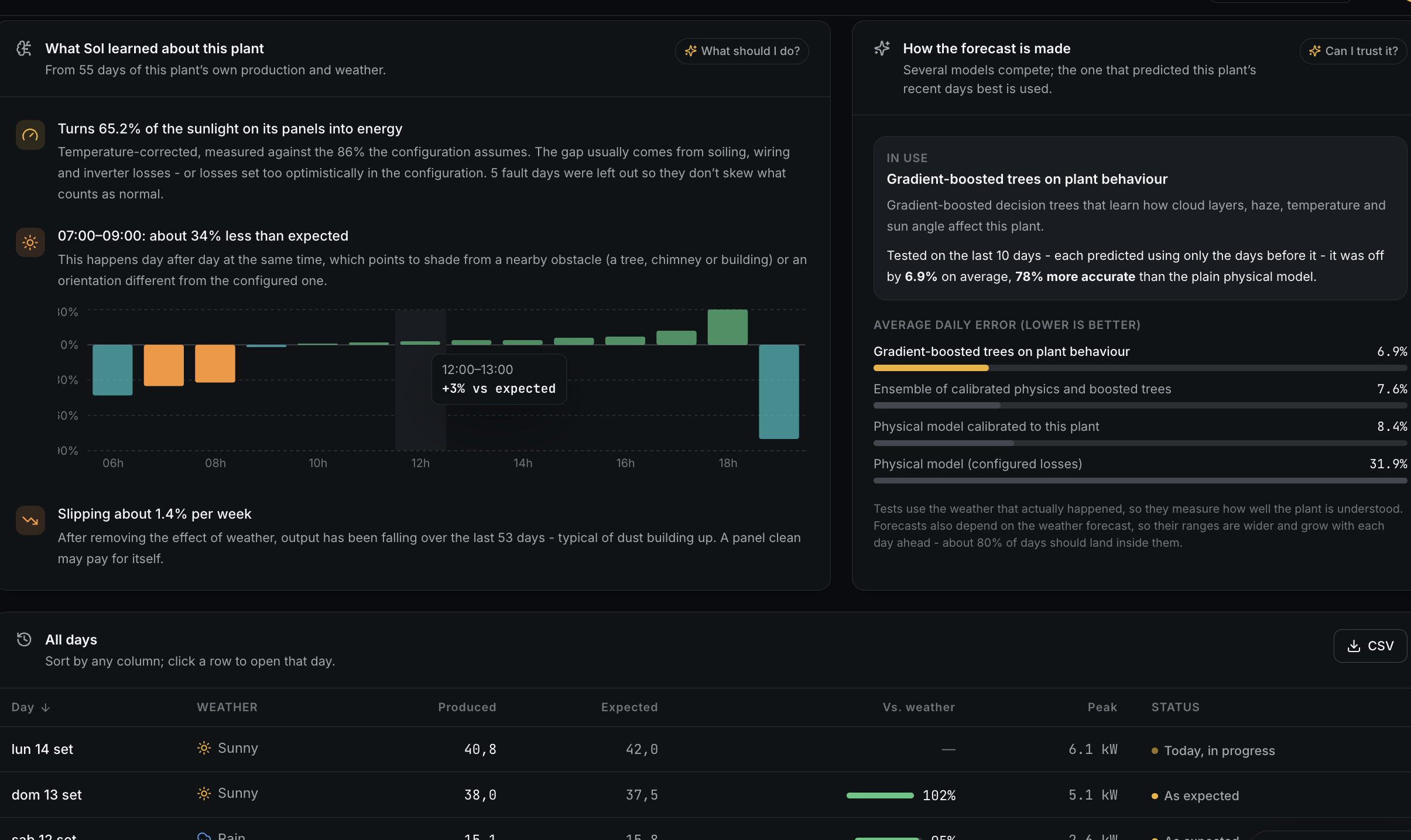
Site learning

The model must earn the forecast.

Physical baseline, calibrated physics, boosted trees, and an ensemble compete on recent hours that are already complete and measured. Analemma exposes average error and directional bias, then keeps the active model an explicit choice.

History also becomes operational evidence. A recurring early-hour loss can point to shade or orientation. A gradual weather-normalized decline can suggest soiling. Analemma surfaces a testable reason without presenting a diagnosis as certainty.

Analemma site-learning view showing recurring production loss, gradual decline, competing forecast models, and measured backtest error

Configuration

One plant can speak through many devices.

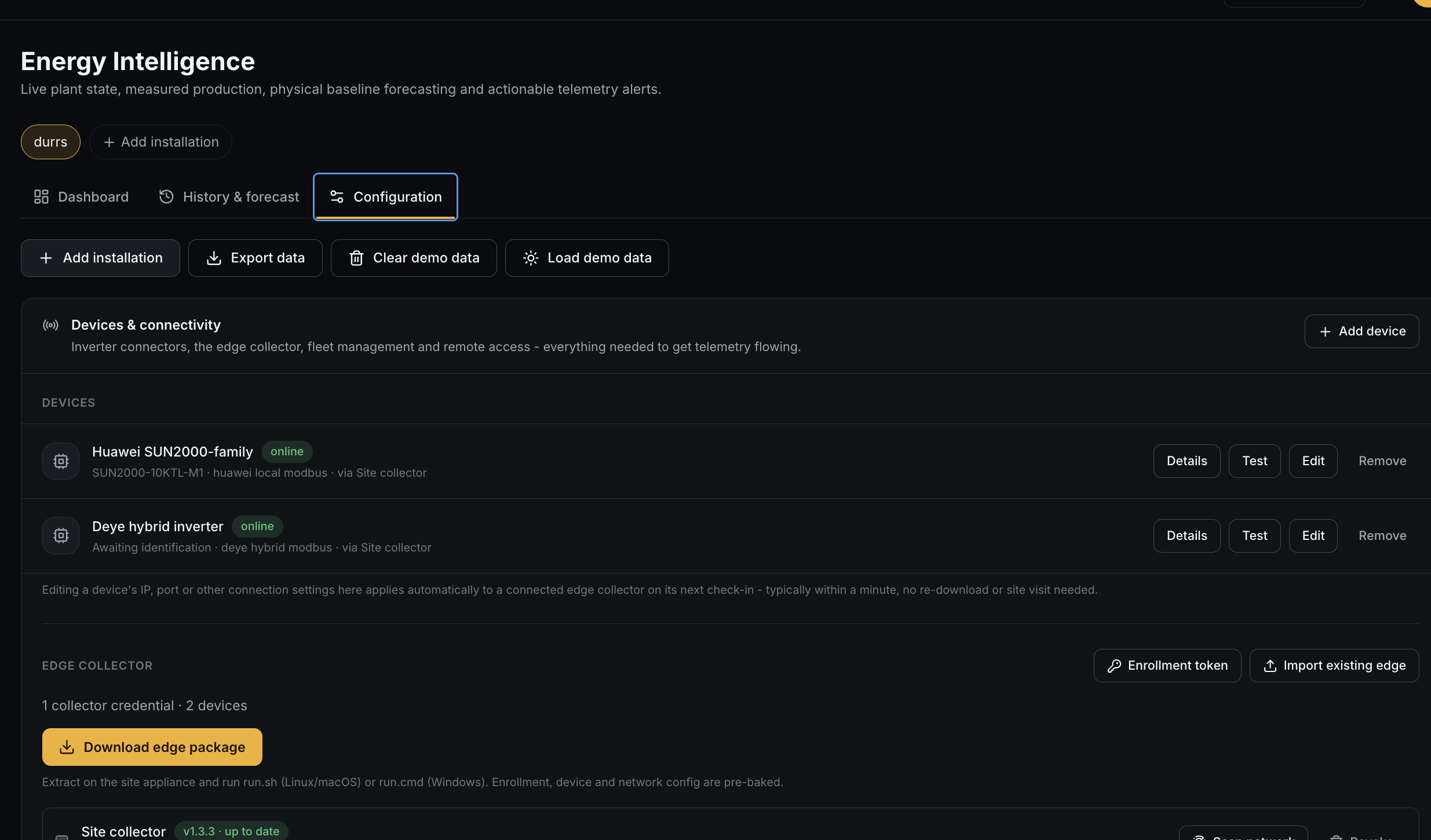
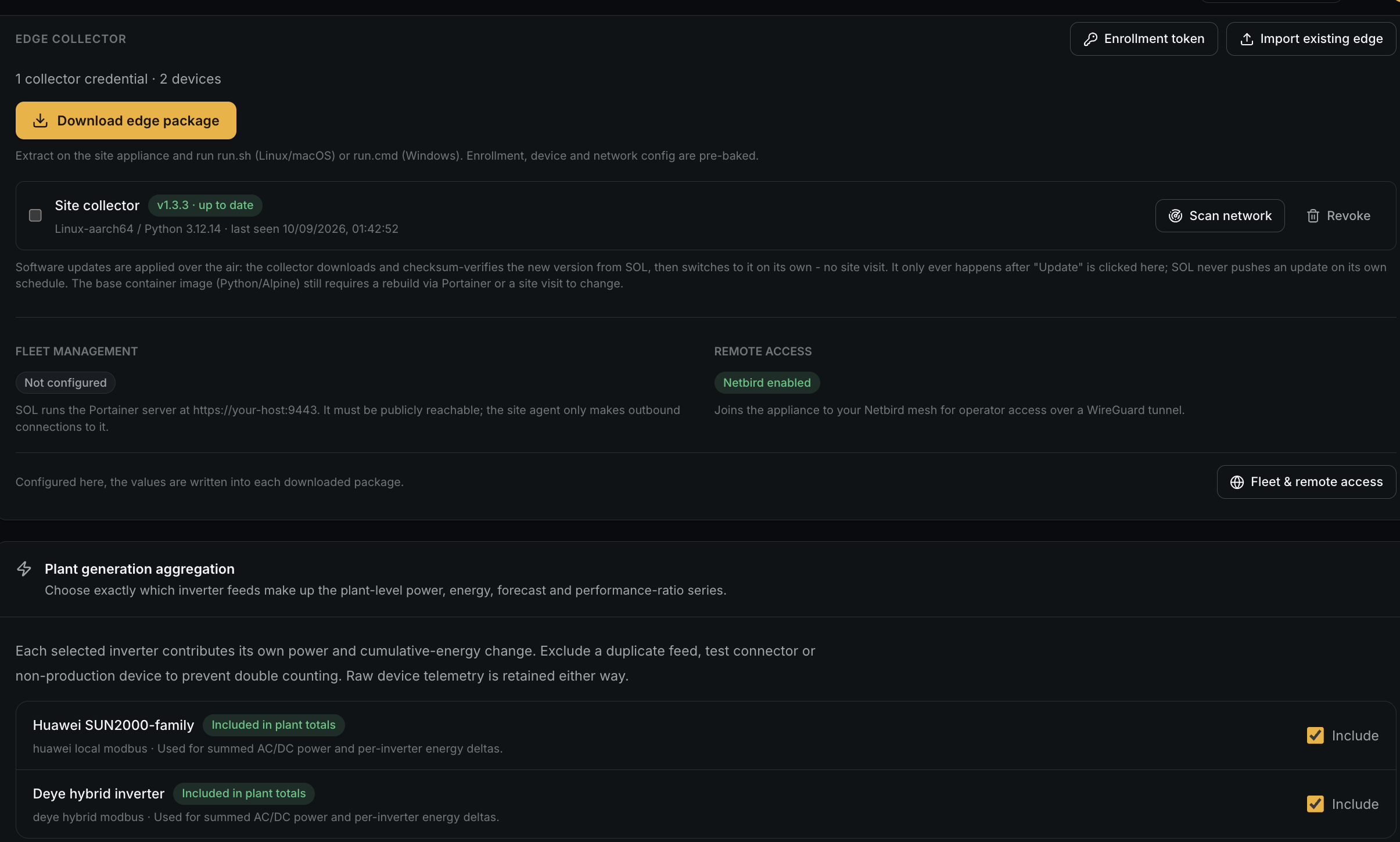
Energy Intelligence begins with connection discipline. Analemma reads documented protocols, keeps raw telemetry per device, and lets the operator decide exactly which inverter feeds contribute to plant power, energy, forecast, and performance-ratio series.

Analemma configuration showing two verified inverter connections and the enrolled on-site edge collector
Each device remains independently testable, identifiable, and visible before it contributes to the plant view.

The on-site collector arrives with enrollment, device, and network configuration prepared. Network scans, configuration changes, and software updates begin only when an operator requests them; the result is verified before anything is applied.

Analemma plant generation aggregation configuration with two selected inverter feeds contributing to plant totals
Select the feeds that belong in the plant total. Duplicate, test, or non-production devices stay out without losing their raw telemetry.
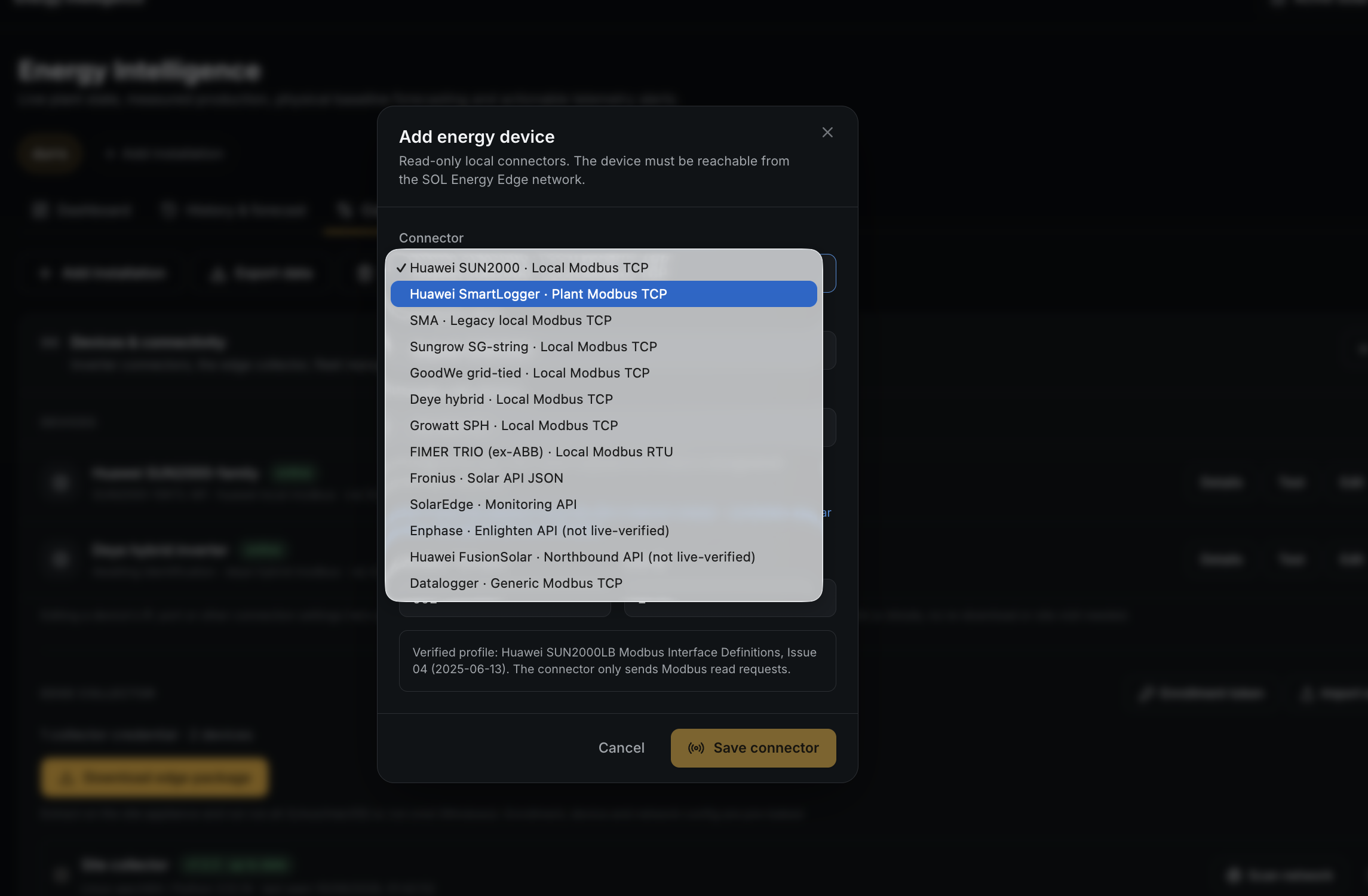
Analemma verified energy device connector selection for supported inverter and logger protocols
Verified local and API connectors make the protocol explicit. A convenient guess never becomes plant data.

Alerting and consent

Alert only on a condition someone can act on.

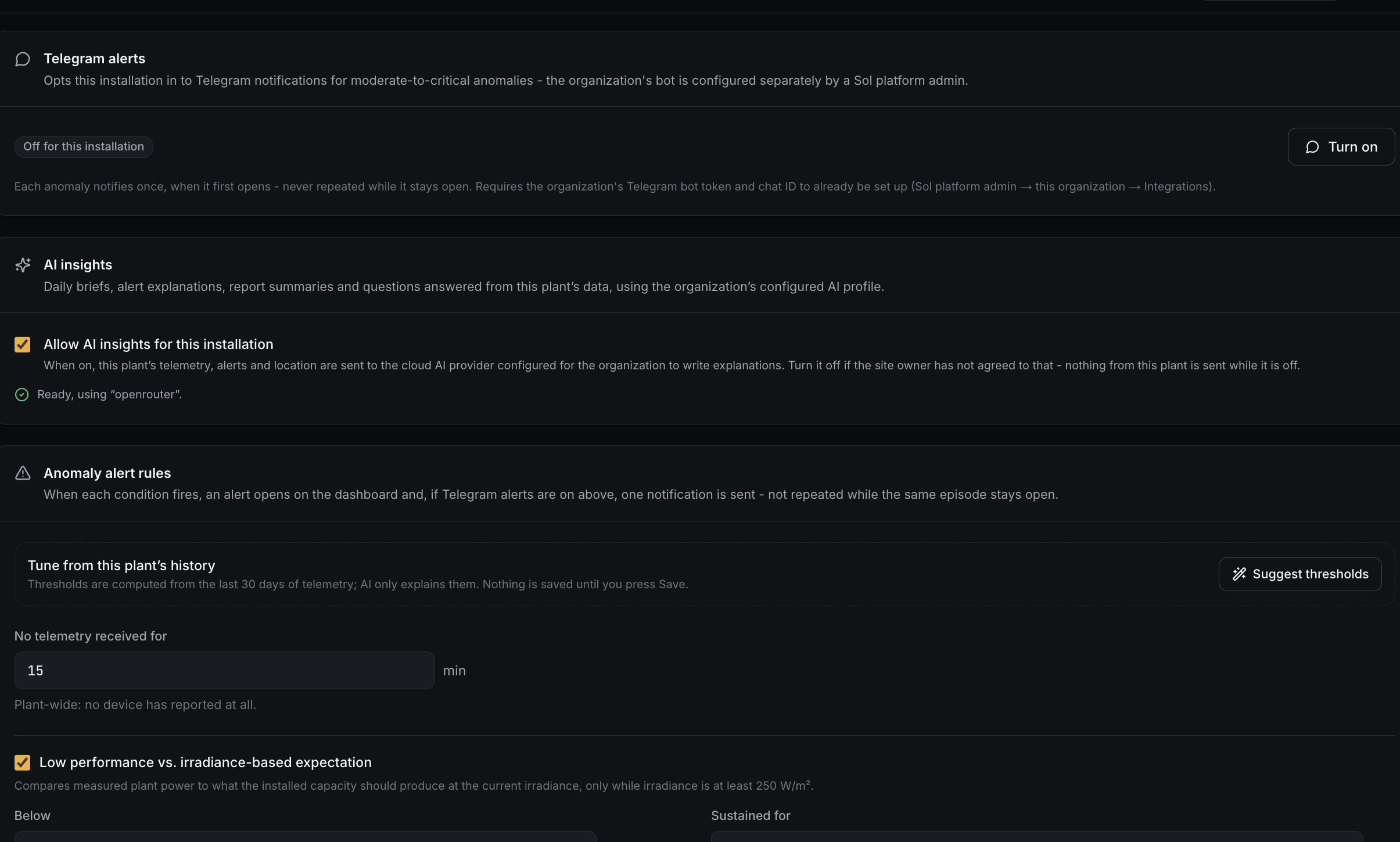
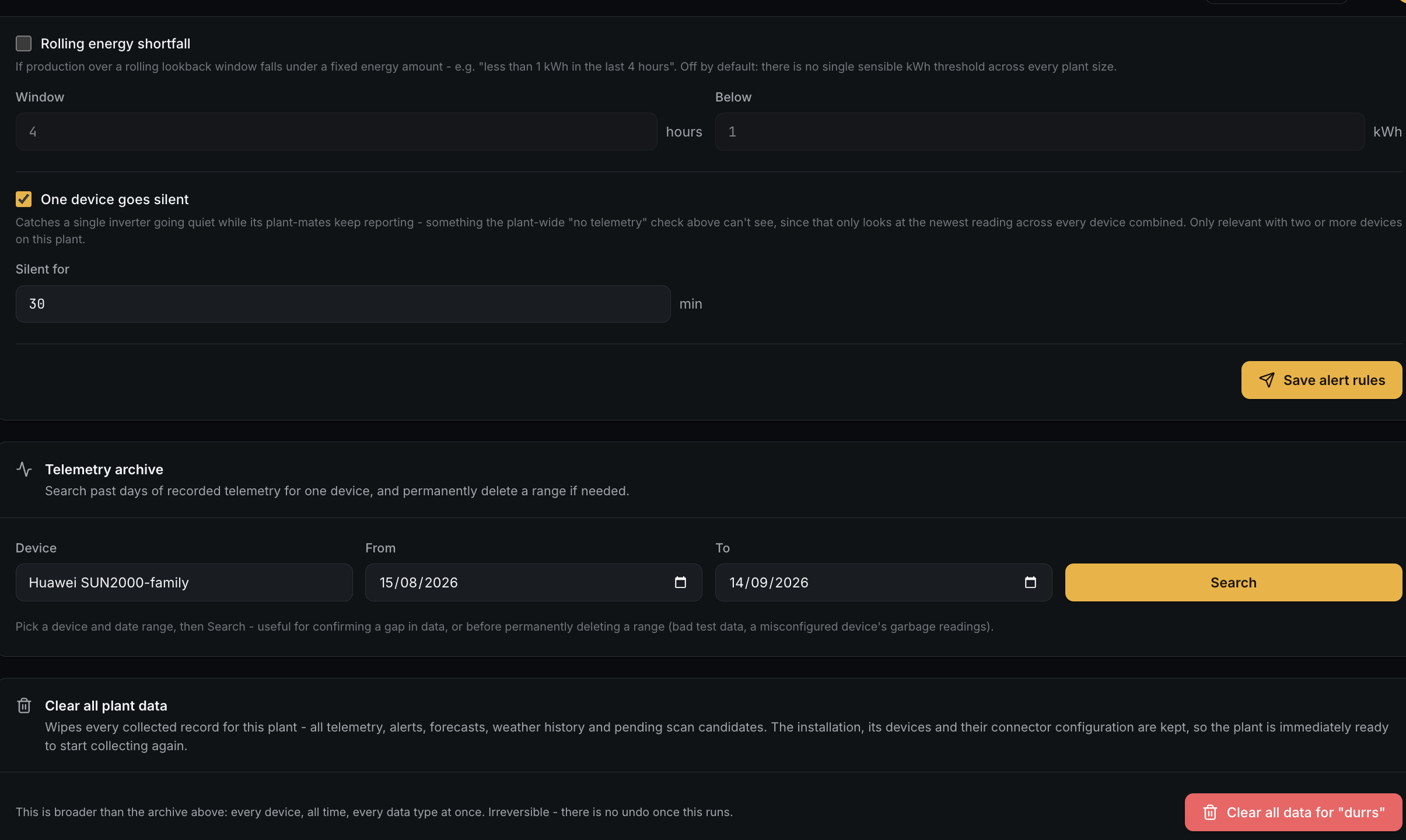
Operators can watch for plant-wide silence, one inverter going quiet while its peers keep reporting, low performance against irradiance, or a rolling energy shortfall. Site history can suggest thresholds, but nothing is saved until a person confirms it.

Telegram notifications are installation-specific and fire once when an anomaly opens, not repeatedly while it remains active. AI explanations have their own consent boundary too: when they are off, this plant's data is not sent to the configured cloud model.

Analemma configuration for installation-specific Telegram notifications, AI insights consent, and anomaly thresholds
Analemma anomaly rules for rolling energy shortfall and a single silent inverter, with telemetry archive controls

From design to production, the project never loses the evidence that made it trustworthy.

More solar projects can reach a bankable design when the reasoning stays connected from site to dossier.

Return to works