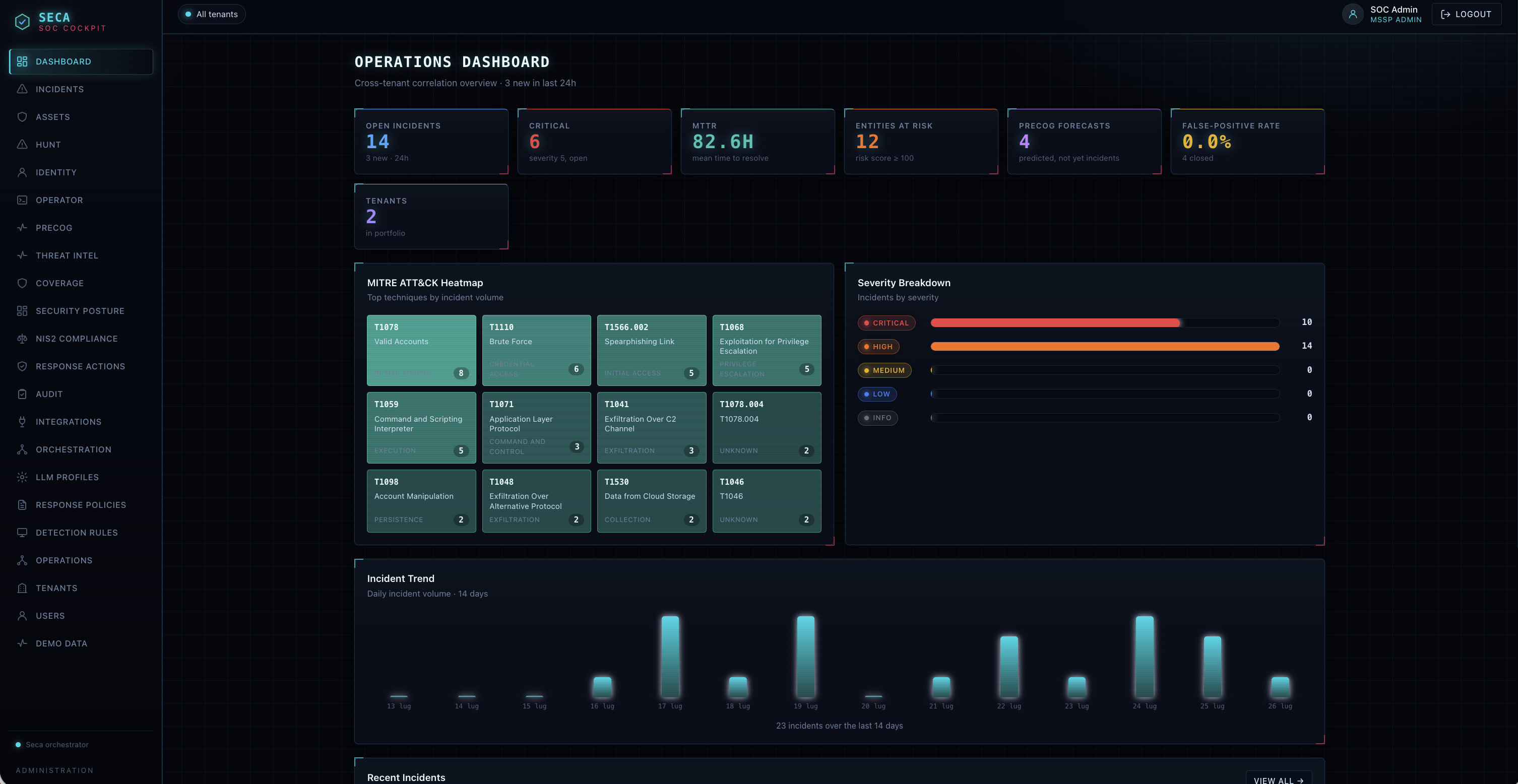
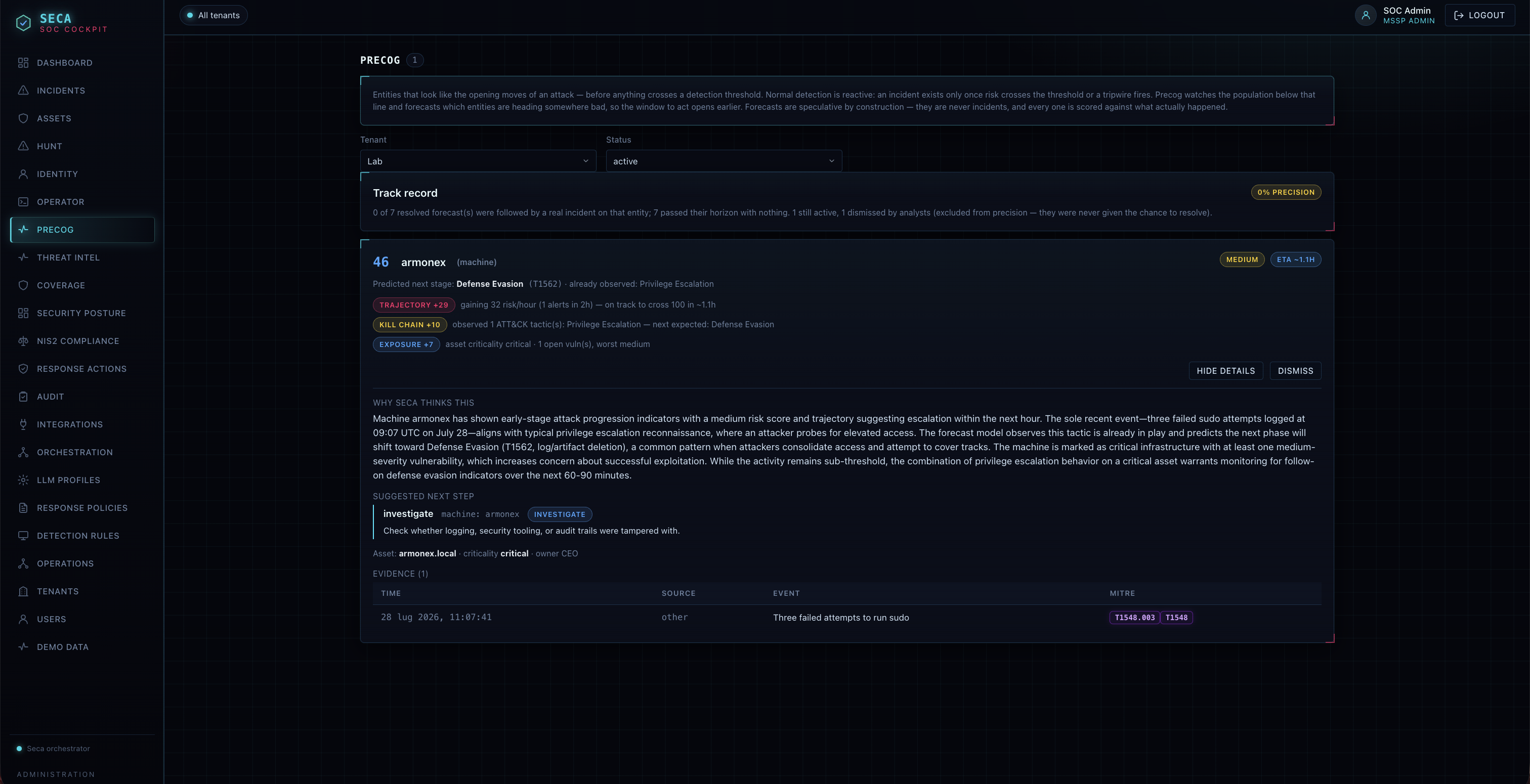
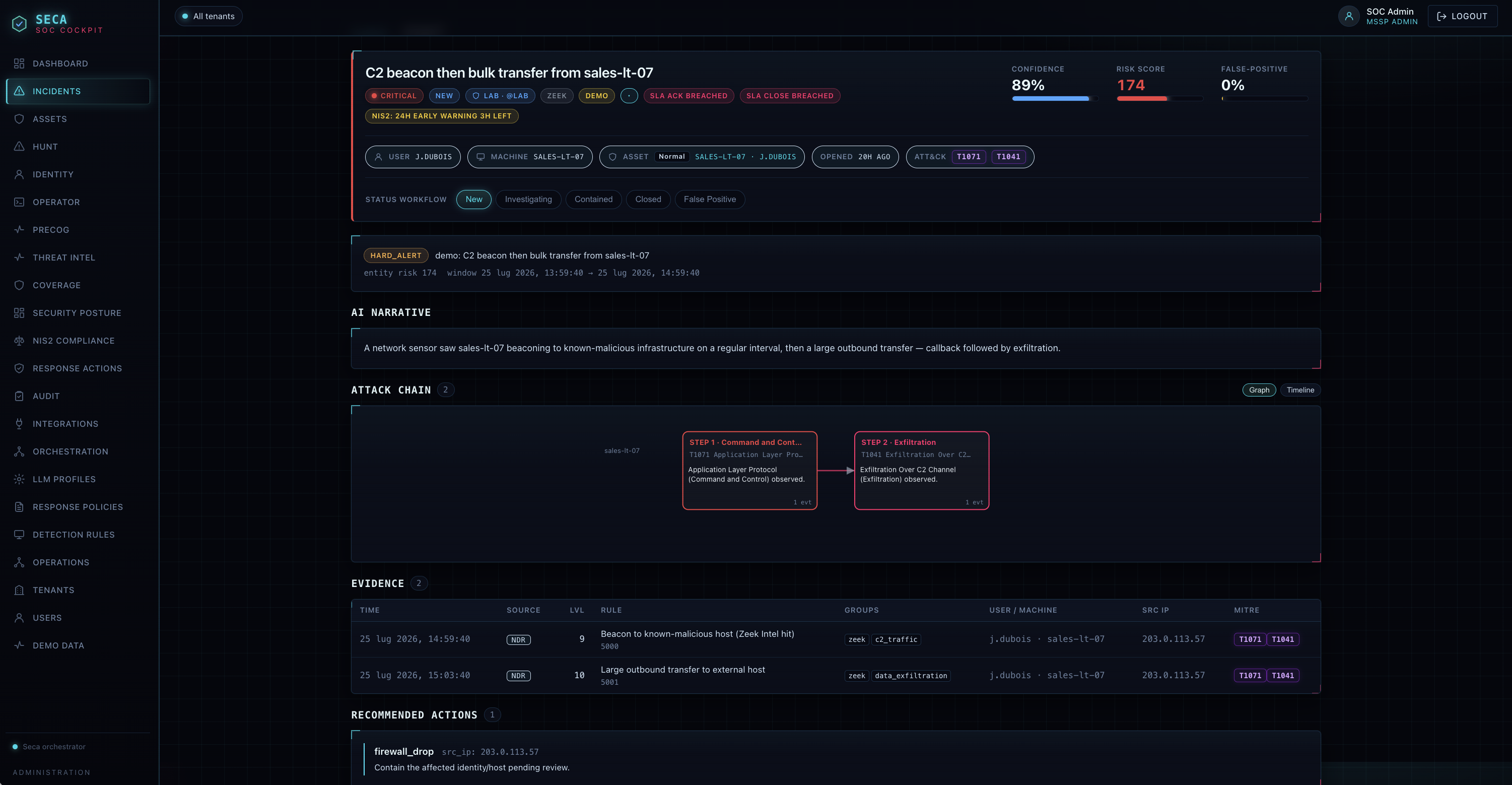
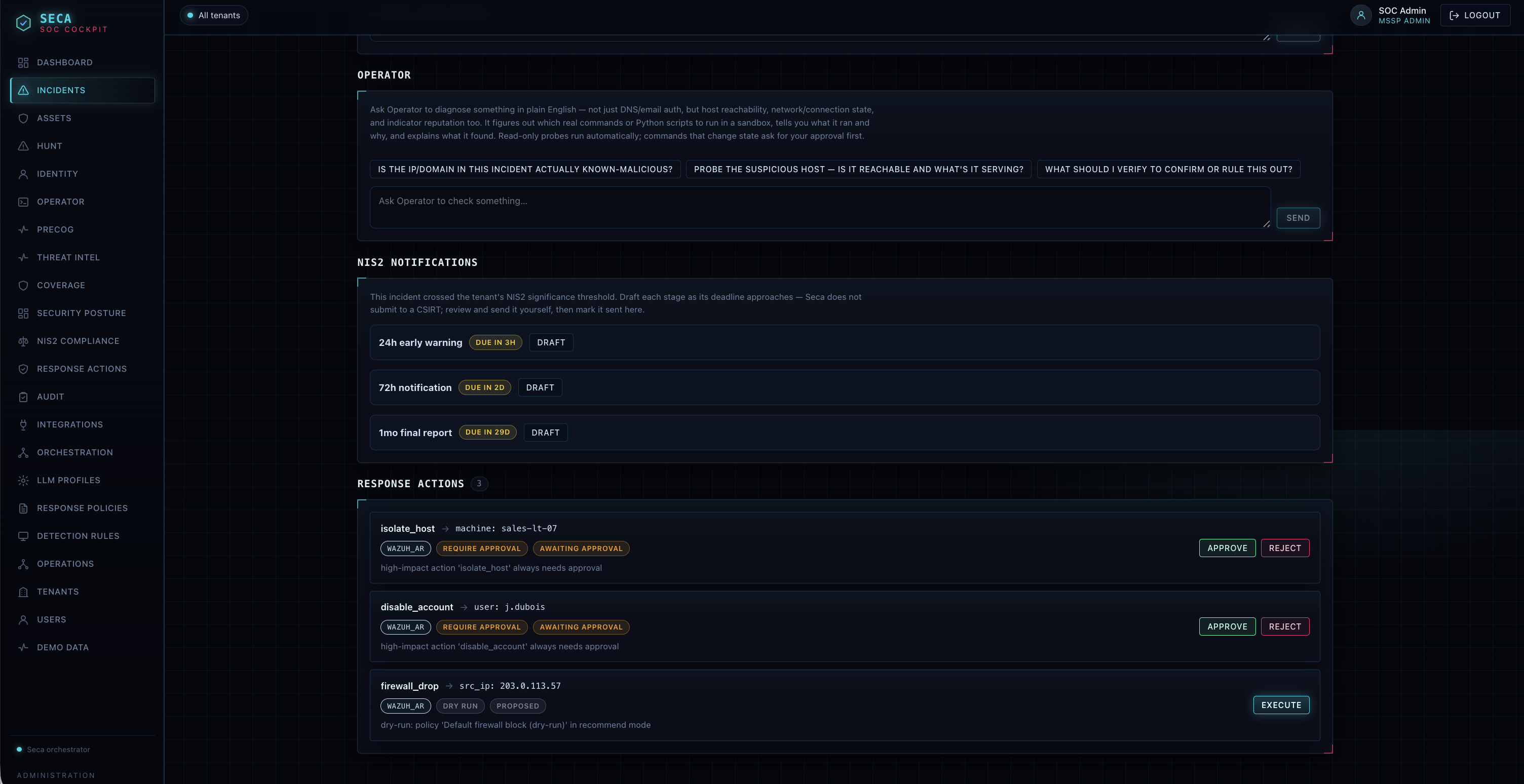
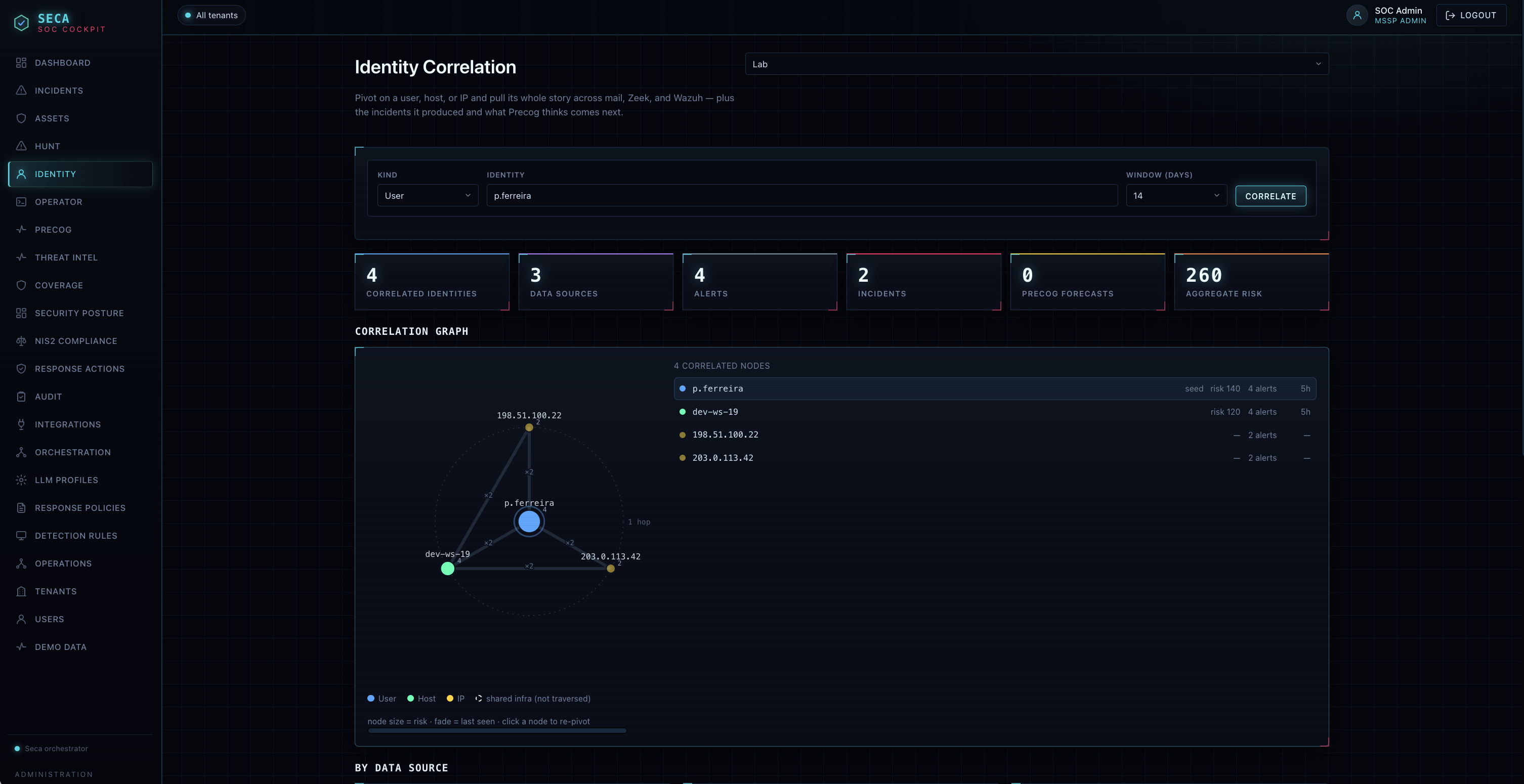
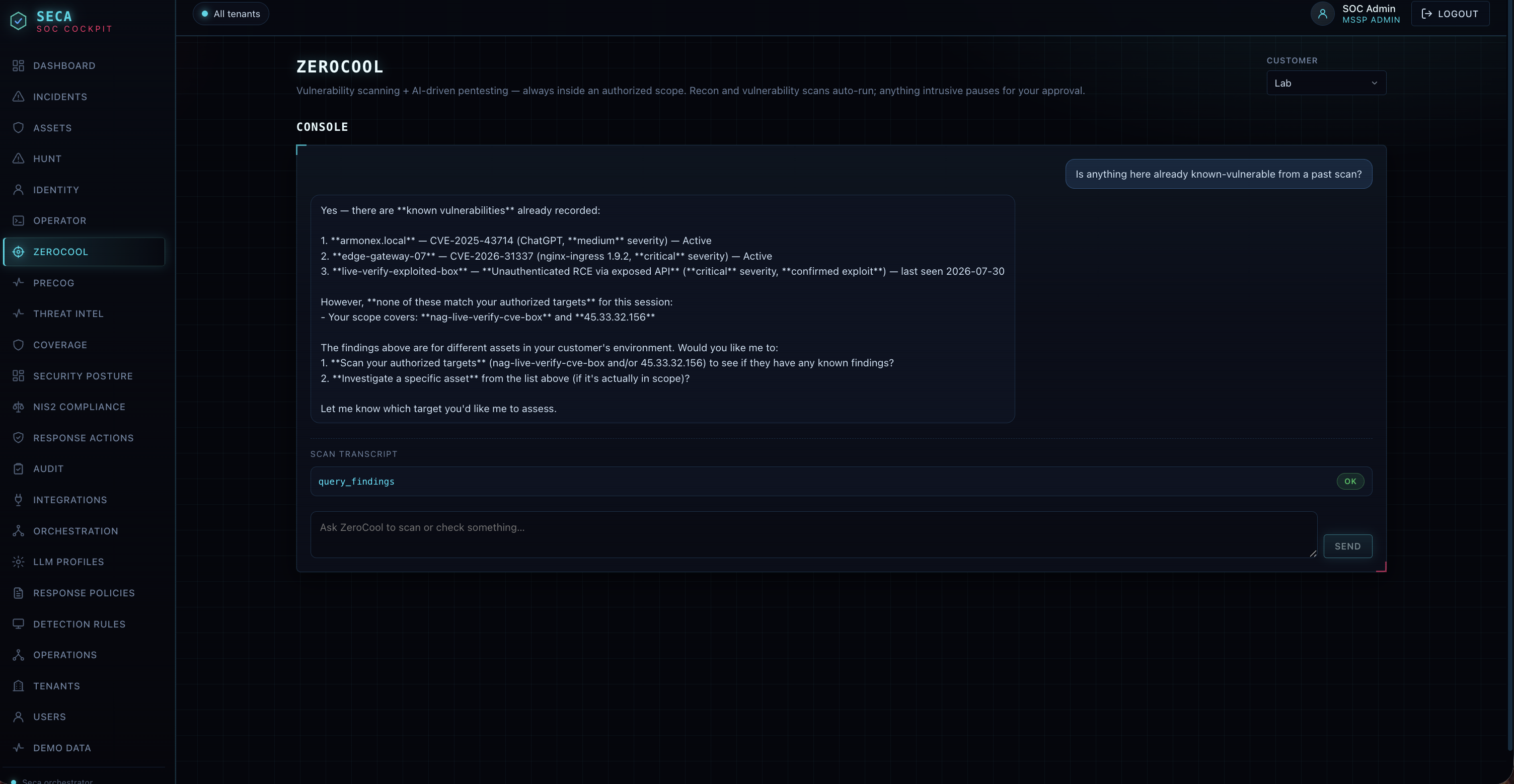
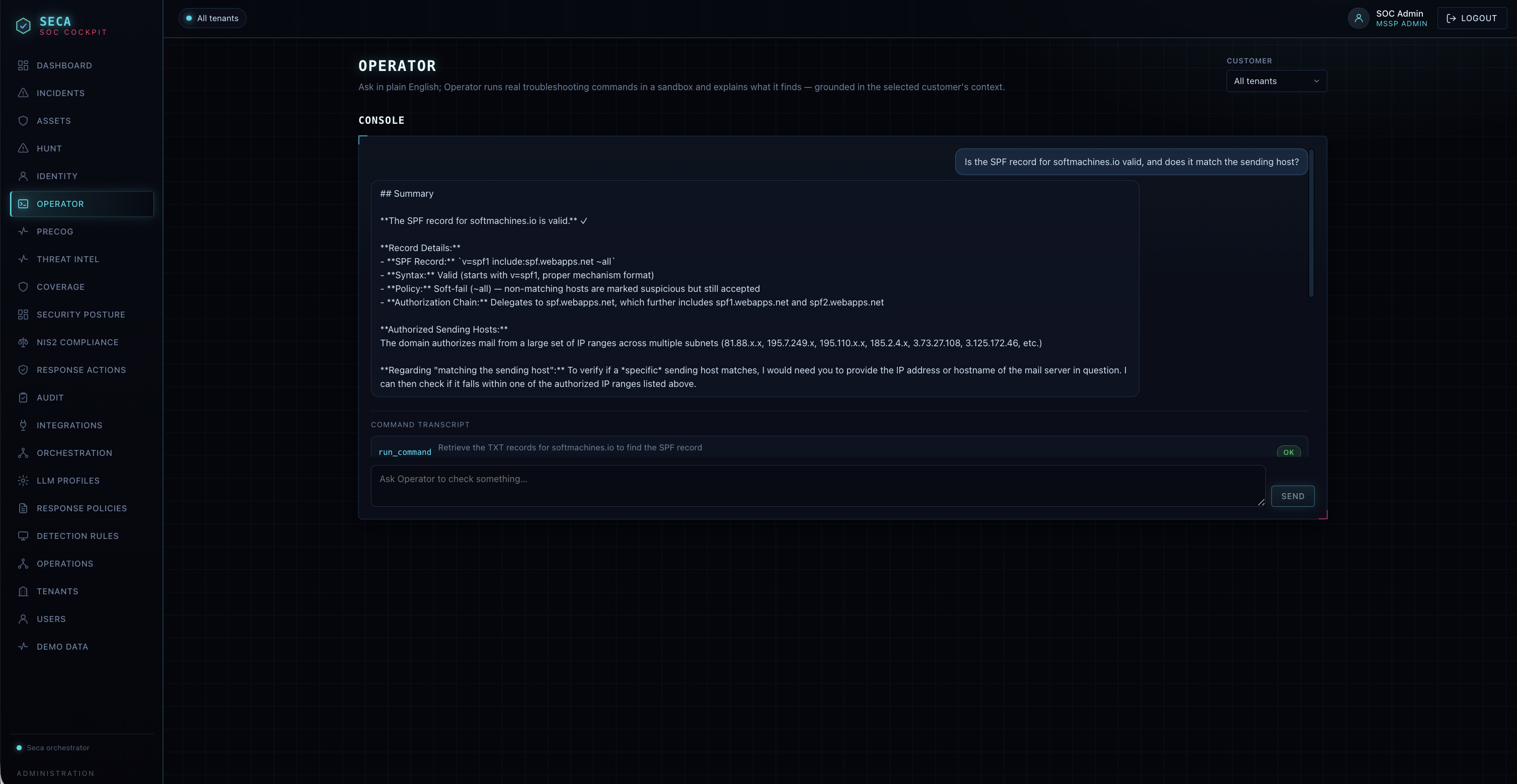
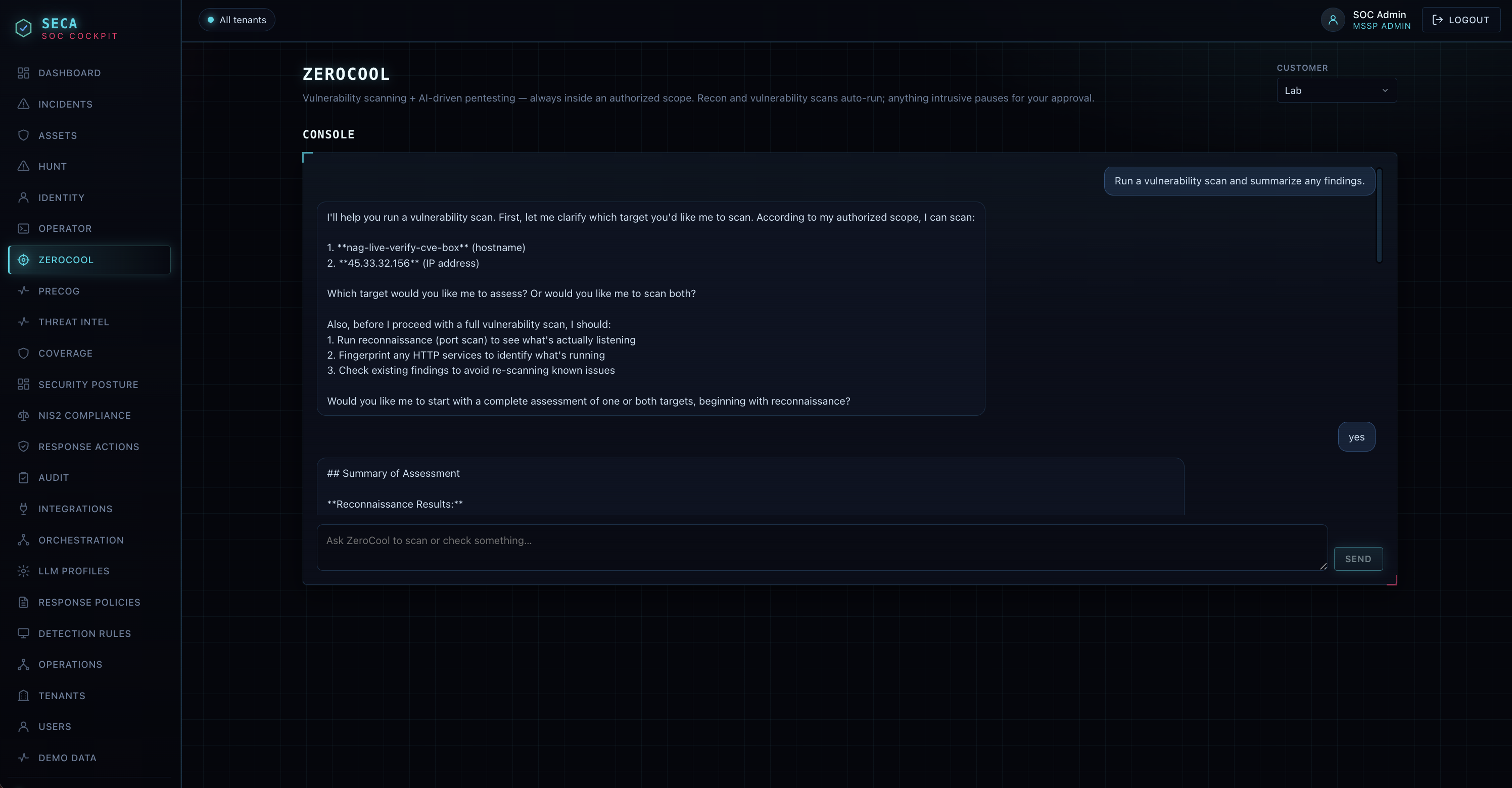
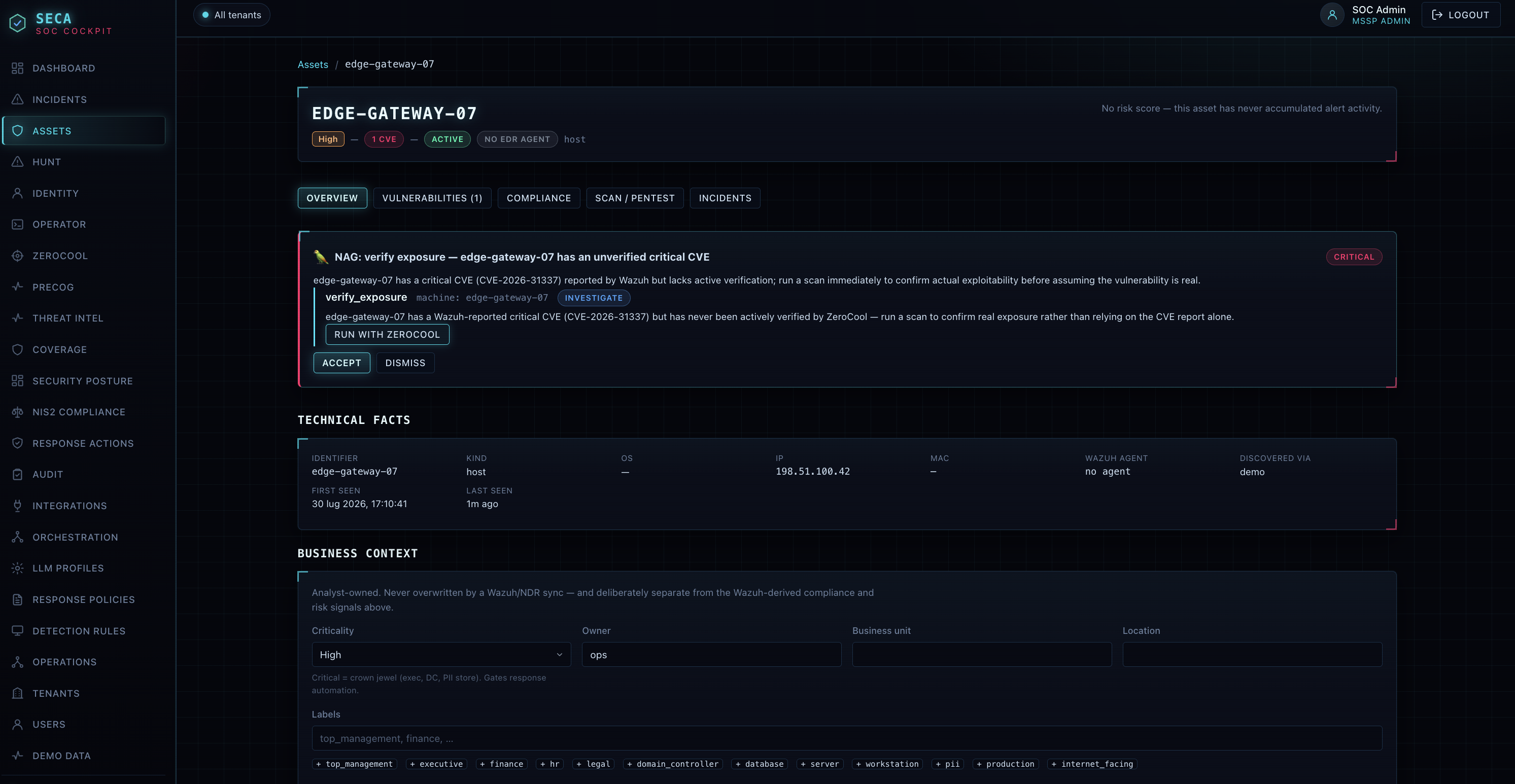
Seca’s AI earns a place by doing work an analyst would otherwise do more slowly: scoring exposure, correlating alerts across users and hosts, drafting a grounded incident narrative, mapping techniques, assembling evidence, suggesting a next action, and carrying out a permitted investigation within a defined scope.
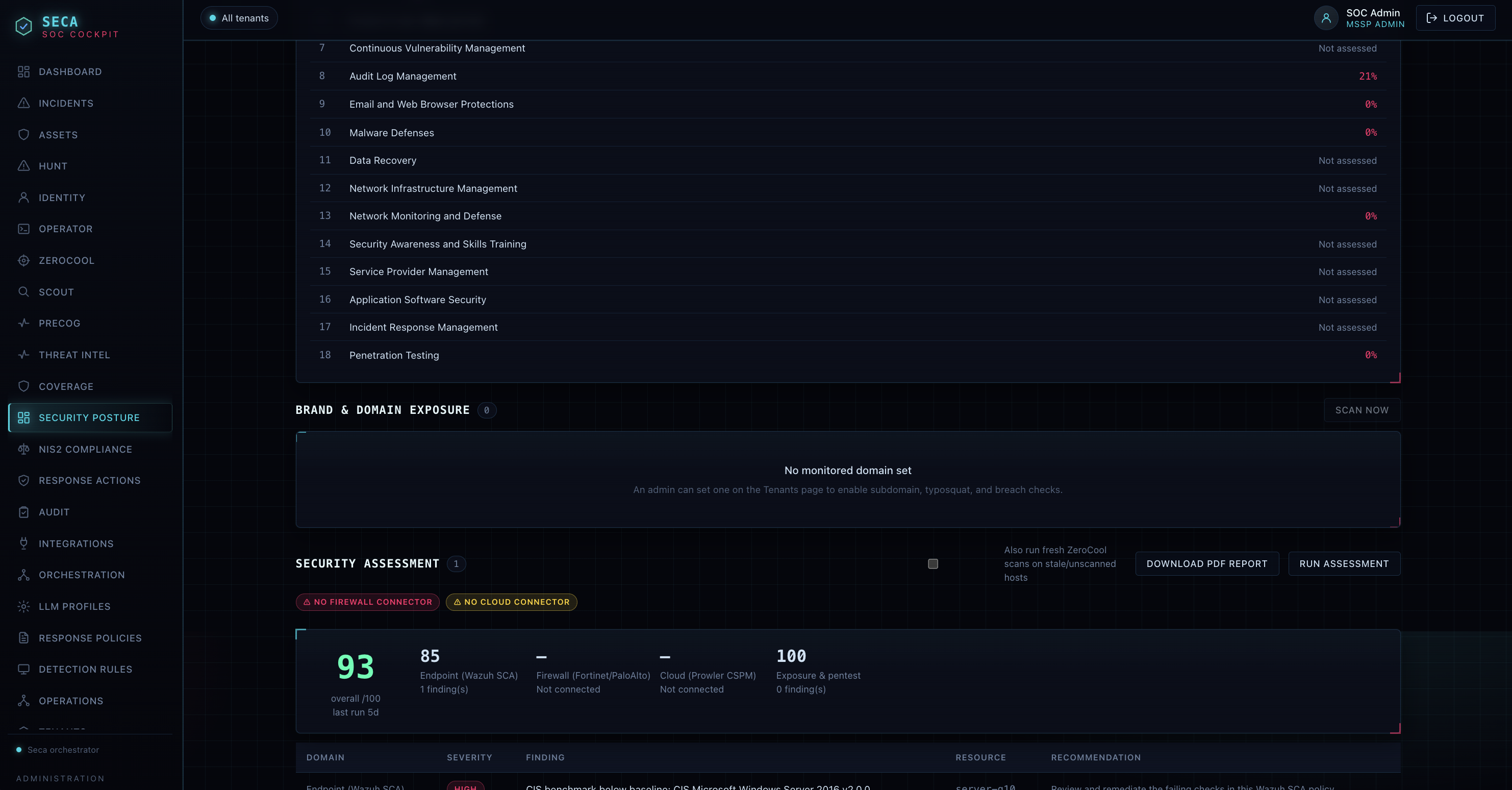
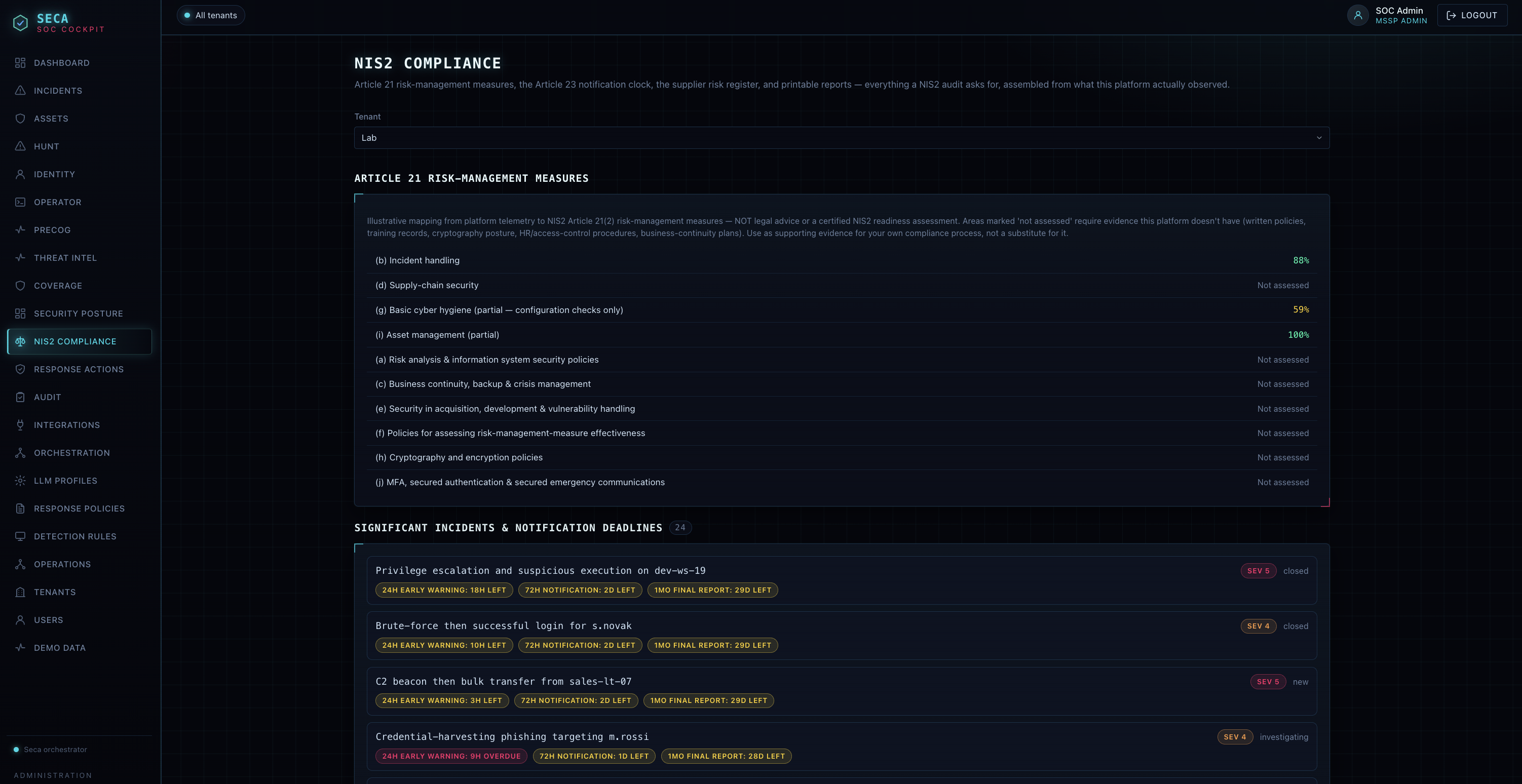
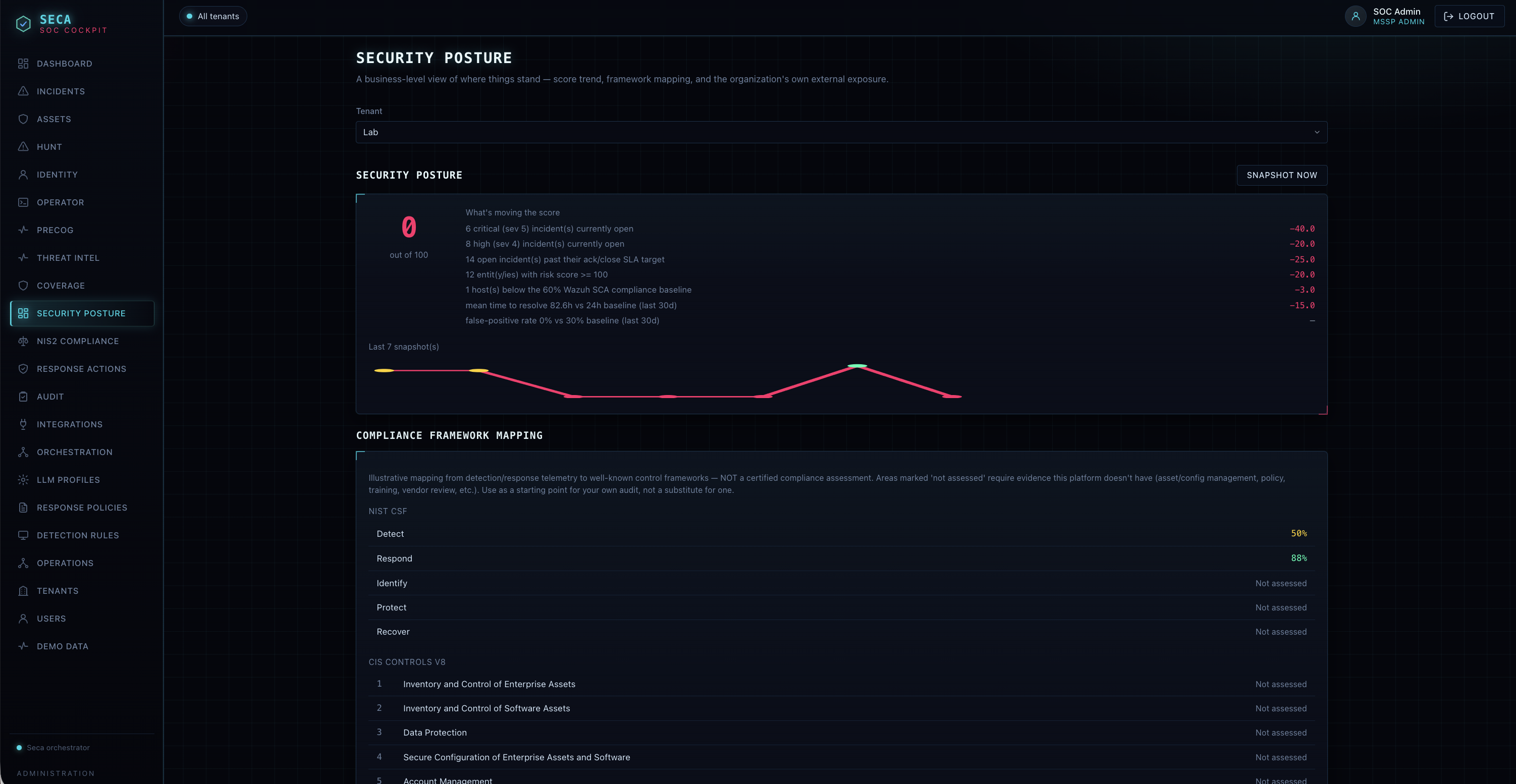
That same evidence powers posture and NIS2 reporting, threat-intelligence enrichment, and the operational details that keep a SOC moving after the first alert. The assessment, the incident, and the response remain connected instead of becoming separate records.
Every output remains a proposal an analyst can inspect, edit, approve, reject, or reverse. The system can be opinionated about which signal deserves attention, but it cannot decide an organization’s tolerance for risk, exceed an authorized boundary, or hide uncertainty behind confident prose.
The lasting value is continuity. A smaller team can hold more of the estate in view because the platform handles the mechanical links from exposure to response, while people spend their judgment on the decisions that genuinely need them.